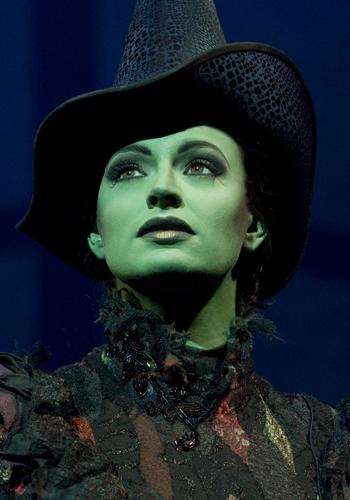
Imagine your favourite childhood story being revised so all the characters you thought you knew end up very different from the way you remember them. The ones you thought were good are wicked, and the ones you thought were wicked find themselves in a kind of witness protection program, with one of them disguised as a scarecrow and the other one… well, that’s a surprise. Wicked, the musical, currently in its second North American tour, is well on its way to becoming a classic – a classic about a classic that is.
A distant cousin to the original iconic tale – The Wizard of Oz – Wicked was recently ranked the only musical in Broadway history to pass $500 million total gross. Loosely based on Gregory Maguire’s revisionist novel of the same name, this feel-good show about the nature of evil gives us the back story of the Wicked Witch and suggests that she was just a misunderstood, traumatized child with a wayward parent and a dependent sibling. The current production at the Canon Theatre in Toronto is a powerful and entertaining version of this thoroughly captivating show. A strong ensemble cast led by Jackie Burns as Elphaba and Chandra Lee Schwartz as Glinda, sing, dance, and fly through fabulous sets by Eugene Lee, with gorgeous costumes by Susan Hilferty.
There’s a parable for everyone in Wicked as dancers and singers take part in a kind of morality tale marked by the odd gender-blurred dance sequence that suggests camaraderie and desire among those inclined toward something a little different. The book for the musical, like the original novel, turns stereotypes inside out by weaving a complex plot that explains, musically, how personalities are formed, how they mutate, and how they often become profoundly misunderstood. But beyond the psychoanalytic overtones, there is a collection of spectacular songs, including the show-stopping finale for the first act, “Defying Gravity.”
And, of course, there’s the whole Friends of Dorothy syndrome, which, although never directly addressed, plays an obvious part in the allegorical plot line that unites diverse creatures in a struggle for acceptance. By beginning the story long before Dorothy even arrives in Oz, we are given an alternate interpretation of characters we thought we knew, turning Dorothy’s pivotal role into a cameo for a petulant shadow; Toto gets called Dodo and never appears onstage. The original L Frank Baum Wizard of Oz stories, inspiring early-20th-century musical versions, led us to the classic Judy Garland vehicle that gave birth to yet another aspect of queer history and our penchant for taking the dispossessed into our hearts and never letting them go. Wicked may not include obvious gestures toward this kind of gay canonization, but it does make a considerable contribution as it declares itself good camp fun with an eye for the queerest of unions.
 Why you can trust Xtra