In a rare anti-developer decision, the Ontario Municipal Board (OMB) has rejected a proposed 32-storey private student residence for Church Street.
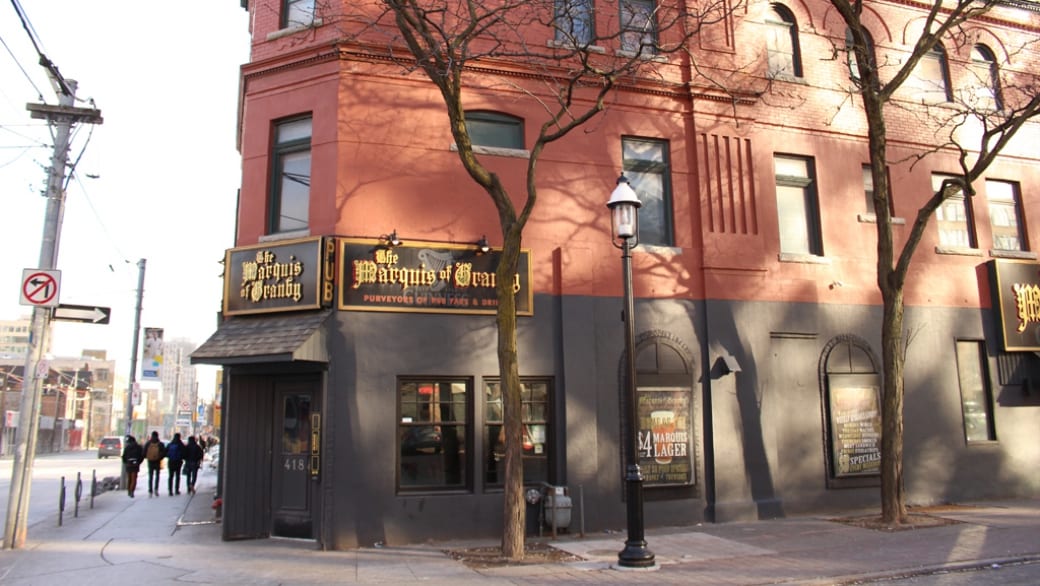
The proposal from CHC MPAR Church Holdings Inc would have a seen a tower built at 412 Church St, housing 532 students. The property is currently a parking lot that sits next to the Stephen Murphy Houses and Stores, a designated heritage site and the former location of the Barn and Stables, a historically significant gay bar.
The OMB, which hears appeals about development issues from across Ontario, is often criticized for working as a de facto approval process for developers, even when a project is opposed by the city government.
But in this case, the OMB rejected the proposal because the design of the building would have clashed with the heritage value of the Stephen Murphy Houses.
“The tall building diminishes the heritage qualities to the detriment of the heritage buildings’ continued functioning as a visible and distinguished built form remnant of the City’s cultural heritage,” read the decision, issued on Dec 23, 2015.
The development was opposed by the City of Toronto and the McGill-Granby Village Residents’ Association.
“I was shocked, and other people on the board were surprised,” says Rick Kubowicz, president of the McGill-Granby Village Residents’ Association.
He says that while the proposal was not a good fit for the neighbourhood, he still didn’t expect the OMB to reject it.
“If you don’t deny this, what do you deny?” he says. “It was such a big building on such a small parcel and not fitting in with the neighbourhood.”
And while density issues were one of the main concerns voiced by residents and the City, the OMB ultimately put much more weight on the heritage property next door.
Other similar projects, like a 25-storey private student residence at Spadina Avenue and Huron Street, were approved by the OMB despite similar opposition. But no heritage sites were next to the property in that case.
“There is value in preserving views of these heritage buildings to the extent possible while developing on a site that abuts such a structure,” read the OMB’s recent decision.
The Stephen Murphy Houses and Store were designated a heritage site in 2006 partially because of their connection to the gay community in the 1990s.
Kubowicz says that while he’s happy with the decision, he still feels that the OMB shouldn’t be able to override the wishes of a city government.
“You would want the city to have its own power to enforce their own laws,” he says.
 Why you can trust Xtra