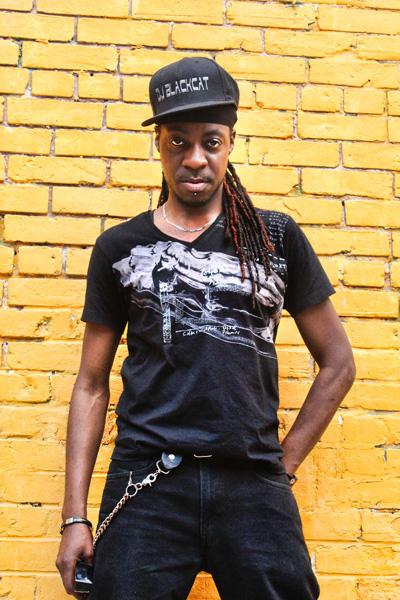
DJ Blackcat is a veteran of Toronto’s music scene, and he says he has seen queer clubs become steadily more appreciative of urban culture. But this year at Pride he saw an incident that made him worry that Toronto’s queer community might be stepping backward.
At the Pride parade, multicultural DJ collective Yes Yes Y’all was spinning hip hop at Centre Stage when they found themselves being heckled by members of the audience. “I was coming after to relieve them, and when I got there they were [being told] they should go to Blockorama (Toronto Pride’s Afrocentric stage) and ‘play that music there,’” Blackcat says. “I personally was very angered by it.”
Sammy Rawal of Yes Yes Y’all says that the heckling his crew experienced, while from only a select few within a packed audience, was “really fucked up.”
“I’m not too sure what these guys were thinking, but I have to wonder whether they even realize they were being as racist as they were… suggesting we go play a ‘cultural stage’ is incredibly offensive,” he says. “That type of racism is almost way more dangerous than the really blatant racism.”
“It really just comes back to people’s ignorance,” Rawal explains. “Some people might have a really narrow scope of what being queer is, and it’s a shame… being queer doesn’t necessarily define what kind of music you listen to or the way you dress or where you hang out.”
Because of the incident, some members of Yes Yes Y’all decided to stop playing and walked offstage. “It really put a bad taste in our mouths,” Rawal says. “I think it’s always really shocking when a minority disses another minority.”
It came as a surprise for Blackcat, who says things have become a lot better since he started in the scene. When he started, he explains, he was branded as the ‘urban DJ’ because he was black, even though he spins a variety of music. Now, he says, he can get work everywhere in the city. He points to parties like FML Mondays at Vizion, where everything from hip hop to techno is spun within the same night, as an example of a diversifying gay music scene.
“I think things are getting better,” he says. “We should keep going in this direction.”
But while some things change, he says, Toronto’s music scene continues to have a racism that remains insidious. “Racism in Toronto is very undercover,” he says. “I guess you’ll find it everywhere; you’ll find it anywhere… it is here, and as much as we’re playing in different clubs right now… it’s still in your face.”

 Why you can trust Xtra