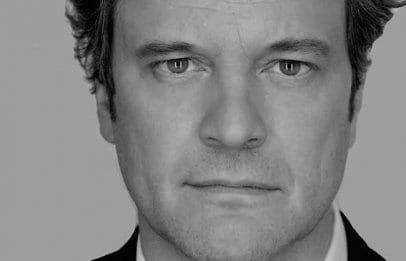
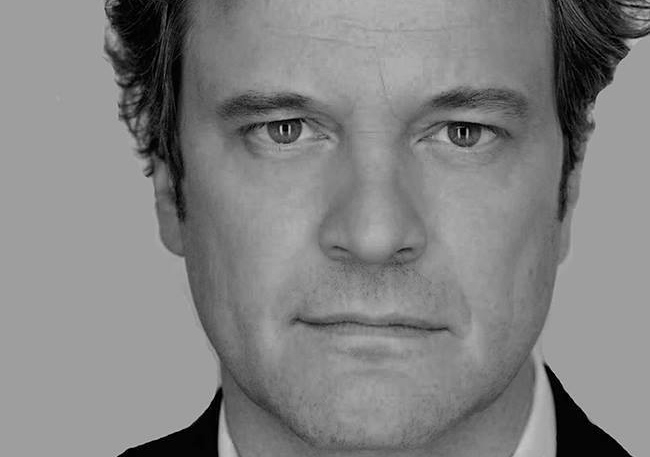
Imagine Colin Firth.
Chances are you’ve imagined him as Mr Darcy in the 1995 BBC Pride and Prejudice miniseries. Firth’s Mr Darcy — smouldering, prideful hunk that he is — is such a slam dunk that it’s hard to imagine Mr Darcy without seeing Firth’s face, or visa versa.
Colin Firth was so good at being Mr Darcy that he inspired Helen Fielding to write Bridget Jones’s Diary, which was so popular it was made into a movie starring Colin Firth.
So, when we watch Pride and Prejudice, are we looking at Colin Firth, or Mr Darcy? Well, both, obviously. It would be silly to ignore the particular personality Firth brings to the role, just as it would be silly to ignore the role and focus purely on Firth in period costume. To understand Pride and Prejudice, you have to understand that a particular actor is taking on a particular role.
This is how Carrie Ichikawa Jenkins, an associate professor of philosophy at the University of British Columbia (UBC), looks at love.
Jenkins thinks the study of love has been broken in two. On one side, scientists study hormones and MRI scans, trying to project love onto our common evolutionary history. On the other, sociologists and gender theorists see love as a purely social institution that can be moulded at will. Which one is right? Both, obviously, Jenkins says.
“We’re looking at ancient biological machinery playing this modern social role, like Colin playing Mr Darcy,” she says. “When we have biological machinery that has evolved over millions of years, during most of which life looked nothing like what it looks like right now — when we expect that biological machinery to play a role that is very specifically socially defined by cultural parameters that are much more recent, we expect to see some mismatch.”
Jenkins wants to bridge this gap. She’s secured a research grant through UBC for the Metaphysics of Love Project, an attempt to find a middle ground between science and sociology. She wants a theory that incorporates all the modern realities of romance, from gay, lesbian and bisexual relationships to polyamory and gender fluidity — a unified theory of love.

(Associate professor Carrie Ichikawa Jenkins, photo by Jonathan Ichikawa)
As I slip into Jenkins’ fourth year seminar on love, hidden away in a drab civil engineering building, her students are already arguing over whether men or women suffer more during breakups. One strident undergrad in a grey hoodie has taken issue with Simone de Beauvoir’s claim that women suffer a “personal hell” after a relationship ends, arguing that high suicide rates among men suggest otherwise.
“I just think it’s debatable whether there’s a difference for women,” he gripes.
“This is philosophy,” another student snaps across the room. “Everything is debatable.”
Julia Janczur, a masters student in philosophy, says she was drawn to Jenkins’ class because it gave her something to think about that matters. When she tells people she studies the philosophy of love, they perk up their ears.
Janczur and her partner, who also studies the philosophy of love under Jenkins, have been inspired to collaborate on studying “bad” or “unstable” love, love under non-ideal conditions. She wants to know what love means in places where it is denied, like gay love in homophobic environments, or where it is disrupted by depression or mental illness.
“Maybe the reason people aren’t talking about love is because we don’t have a very clear conception of it,” she says. “It seems like people are almost scared to talk about love at this point.”
Another topic that pops up again and again in new philosophies of love is the idea of love between more than two people. Janczur and her classmates are in the middle of reading Minimizing Marriage, a book by another cutting-edge philosopher of love, Elizabeth Brake. Brake thinks recent advancements in marriage equality have not gone far enough, and a truly fair system of marriage would include plural marriages, “urban tribes,” and even non-sexual caring relationships between friends.
“Psychological research shows that caring relationships can promote our health and mental health. But our society tends to celebrate, and support legally, only one narrow kind — dyadic romantic relationships,” Brake tells me by email.
Instead, Brake would like to see a system of “minimal marriage” that supports all kinds of caring relationships, regardless of gender, sexuality, number or personal morality. “I don’t think it is the liberal state’s role to uphold one understanding of marriage any more than it is to uphold one religion,” she says.
In a recent article, Jenkins follows Brake’s example by taking a hammer to the idea that romantic love can only exist between two people. Those who define love as essentially between a couple, she says, are just as wrong as those who say love is only between a man and a woman, or only between people who have sex.
A few hours in Jenkins’ seminar will quickly disabuse anyone of the idea that a class on love is easy fluff. Jenkins cut her teeth in metaphysics and epistemology, writing brain-bleedingly difficult work on the basis of mathematical knowledge. Turning her mind toward love, she says, requires the same attitude.
“I’m asking those same questions about love. Is it real? What nature does it have? How much of it is socially constructed?” she says. “If you don’t know what love is, I don’t know how you’re supposed to know if you’re in it, or not.”
(Top image: Colin Firth from Colin Firth 24/7 Facebook fan page)

 Why you can trust Xtra