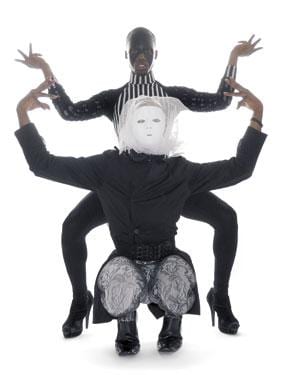
Fabulous young Torontonians are voguing, strutting and walking as never before.
The ballroom scene, a long-time queer subculture found mostly in cities in the United States, has finally gained a real foundation here.
Some believe the underground drag balls took place as early as the 1930s in New York City gay bars. They have been growing ever since. In the past year, the Toronto Kiki Ballroom Alliance (TKBA) acquired more than 75 new members between the ages of 15 and 29.
This summer the group won the first annual Spirit of Will Munro Award, a $10,000 grant to establish a project that uses the arts to build a lasting, youth-friendly community for queers.
The groups meet weekly in “houses” (each house has two parents, godparents, overseers and a bunch of children) to practise for ball competitions against other houses.
When children become involved with a house they have a say in the ballroom names they are given.
Twysted Monroe, a parent of the Pink Lady house, won his first ball in 2008 at age 18. He travelled to Detroit to compete in it, and then went to a number of competitions in New York.
Monroe says he was drawn to the ballroom culture because “you get to be creative and artistic. People appreciate you for the talent you’re putting forward.” He thinks TKBA is a safe space for young people in the queer community to go out and have fun. “We get kids coming out from Jane and Finch, Scarborough, Ajax, Mississauga . . . everywhere.” There are members who identify as trans, queer and straight: “It’s literally a dream community for me right now.”
Monroe believes today’s society requires kids to have a lot of confidence, and he encourages his children to “walk” (ie compete) in the balls, which are much cooler versions of the traditional beauty pageant.
The long list of competition categories includes voguing, face and runway, as well as more inventive categories like Sex Siren, in which female figures dress up in lingerie or sexy clothes and, as Lady Ice, a 22-year-old lesbian and child of the Xpradaganza house puts it, “have fun.”
“If the panel of judges are gays, we try to turn them straight.”
Monroe believes kids who are bullied or contemplating suicide should join a ballroom house. Monroe has seen fellow ballroomers get bashed in the hallways of York University, and he hasn’t yet been able to come out to his real mother, which is why he (like the others in this article) hasn’t used his real name. He says being a part of TKBA helps him deal with these struggles.
Ice believes the ballroom scene has given a lot of young girls a social circle they wouldn’t normally have. “When they win categories they have more confidence in who they are,” she says.
And most importantly, she says, they respect one another.
Tiny Tim, 23, joined the ballroom scene when he was 17. “I was never insecure about my sexuality, but it was good to have people my age and older who had the same sexual preferences as me,” he says.
Tim remembers his first Sex Siren production: “I was still putting on my clothes; I wasn’t even ready and my friends pushed me out on the stage like, ‘Go! Go! Go!’ and when I went on, everyone was screaming and cheering. It was such a rush.”
Tim says that the houses do a lot for people’s self-esteem and that it’s important for queer kids to have people they can speak to about being queer, especially if they don’t have support at home. “We come together; we have fun,” he says. “And even if you don’t win anything, you’re leaving with your friends.”
 Why you can trust Xtra