Queer history offers a treasure trove of stories of gay and lesbian heroism and horror, survival and surrender, seemingly ready-made to be unearthed and turned into feature films. Films like Gods And Monsters, Wilde, Stonewall, Bent and Edward II have reclaimed historic figures and events, providing a window onto our past and introducing us to pioneers who, in their own way, managed to live queer lives in truly inhospitable times.
But for every film that seeks to examine our queer past, there are thousands of stories that go untold. Directed by Gil M Portes, Markova: Comfort Gay unveils a potentially explosive segment of queer history in telling the true story of Walter Dempster Jr (“Walterina”).
Walterina was a “comfort gay,” captured by the Japanese army upon their invasion of the Philippines and used to “service” soldiers sexually during the war. Many Philippinas were recruited as “comfort women” and their stories have garnered much attention, particularly in the South Pacific, as they launched a demand for reparations from the Japanese government.
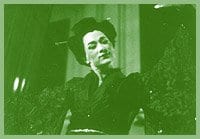
Beginning at the Home For Golden Gays (a real-life gay seniors home in Manila) where an aging Walterina lives with a gaggle of sprightly queens, the film flashes back to Walterina’s youth, where, as an effeminate teen, he was the victim of violence at the hands of his homophobic brother. After his brother’s death, Walterina embraces freedom by joining a troupe of female impersonators who perform in Manila’s nightclubs. But the act is a little too real for the newly arrived Japanese soldiers, and when their secret is revealed Walterina and her friends are brutally imprisoned and raped.
Upon their release (we’re never quite sure how or why a lot of what happens in the movie occurred, due to a muddy chronology and a dearth of details), the troupe performs again, this time for their US saviours, before Walterina settles into a career as a makeup artist and dance teacher.
And that’s about it really. There’s a shattering, important film to be made about the life of “comfort gays,” but Markova: Comfort Gay isn’t it. Bogged down by the shrill histrionics that characterize much Philippino melodrama, particularly queer films from the country, the film is also hampered by a complete lack of dramatic tension and insight into Walterina’s character, motivation or inner life. It’s tragedy played as soap opera, with gossipy unnecessary scenes undercutting the power of the harrowing events that Walterina has survived.
And the framing device – an aged Walterina telling his story to a skeptical reporter – doesn’t work, due to the constant interruption in the narrative and the fact that the reporter (played by real-life journalist Lauren Legarda) simply can’t act.
Interestingly, Walterina is played by three members of the same family, a father and two of his sons. “Comic legend” Dolphy (renowned in the Philippines for his skill at playing flamboyant gay characters), plays the elderly Walterina with moments of genuine emotional depth, but all too often slips into stereotypical shrieking. Dolphy’s youngest son, Jeffrey Quizon, embodies Walterina as a teen and seems to be channelling his father only with a higher pitched wail. But the most skilled portrayal comes from Eric Quizon, playing Walterina during the darkest moments in his life. A subtle, quiet performance that brings dignity to the character, Eric’s portrayal hints at the emotional depths the film could have explored in more skilled hands.
As the first film to recount the story of male sexual enslavement during World War II, Markova: Comfort Gay deserves credit for exposing a dark chapter in queer history. If only it could have been a more thoughtful tribute to the men whose story it tells.
* Markova: Comfort Gay, in Tagalog with English subtitles, opens Fri, Aug 9 at the Carlton (20 Carlton St; 598-2309).
 Why you can trust Xtra