***
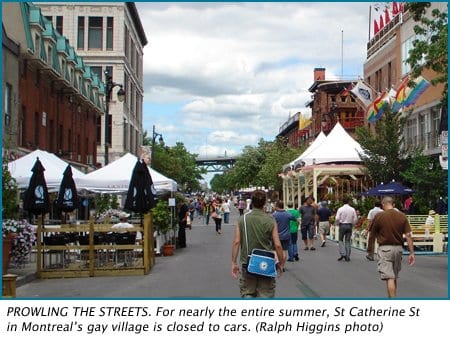
Montreal’s gay village is more vibrant this year than ever before since the city closed St Catherine St — the main artery of the Village — to automobile traffic. From Jun 20 to Sep 2, over a dozen blocks have been converted to one giant pedestrian mall.
The proposal to make part of the Village a pedestrian-only space originated with Bernard Plante, the general director of Société de développement commercial du village (SDC du village), and with strong support from the mayor of the Ville-Marie district, Benoît Labonté. Plante spoke with Xtra.ca recently about how and why this new project came to life.
The Village has been closed to traffic before, explains Plante. The strip was closed for a few days at the beginning of the Outgames in 2006 and again last year for several weekends during special events. The positive reaction following those events and the worldwide trend towards more environmentally-friendly spaces led to the closure of the street for 75 days this year. In addition to cutting back on pollution, the increased pedestrian traffic will lead to business profits for the entire area, Plante suggests.
Eighty outdoor sculptures line the street, with themes that combine environmental concerns with Montreal style and humour. Some are of broken-down cars covered with creeping ivy, others are images of people with their heads stuck in the earth, their bodies outlined by trailing, flowering plants. At night the art is illuminated by solar-powered lights.
Some critics have claimed that closing the street merely routes the traffic pollution elsewhere, and Plante admits that it is a pilot project with plenty of testing yet to be done. A full assessment is set to be undertaken later this year.
In the meantime the visual impact is remarkable and atmosphere on St Catherine is relaxed, welcoming and happy. The Village is filled with shoppers, buskers, painters and people as they stroll through the streets. Crowds of queer men and women shop, greet each other on the street or meet for a drink or dinner.
The financial impact on all businesses is not yet clear, but a glance at the Village’s 45 bars, restaurants and cafés suggests the project is a success. Filled to capacity, patios spill over sidewalks and onto the bustling streets as diners eat, drink, chat and watch the smiling passers-by.
Area residents have expressed concern over noise increases, so no music is permitted outside. But inside the bars, the dance floors are alive and the decibel level rises as the evening progresses. Queer Montrealers love to party and the summer of 2008 has just begun on St Catherine.
 Why you can trust Xtra