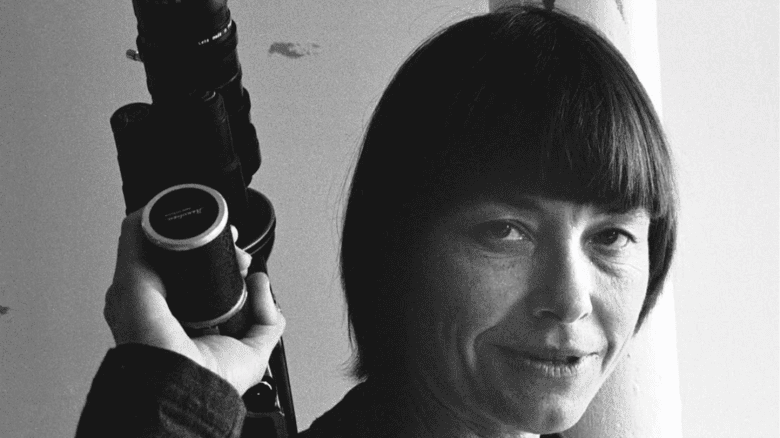
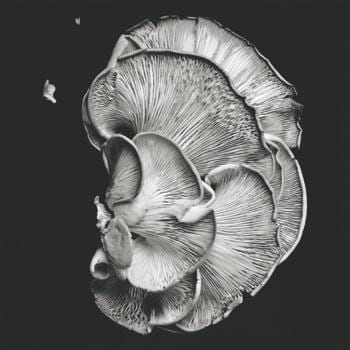
Dale Reid says she has never considered a high-grade digital camera -- "that's a foul language to me." Credit: Dale Reid.
Sometimes it seems that anyone can call themselves a photographer these days, armed with digital cameras, high resolution printers and some basic Photoshop ability. But skills like composition, lighting and perspective can’t be replicated by computer software and still serve to set the trained artist aside from the dabbling hobbyist.
Dale Reid’s photographs are about as far away from computer-assisted imagery as you can get: pears dance their way across rain backdrops, parrot tulips explode majestically toward the viewer, and oyster mushrooms reveal an intricate terrain of ridges and veins in black-and-white shots that are both aesthetically pleasing and visually provocative. And it’s all done with nary a computer or electrical cord in sight.
“You can do amazing things with film if you put your mind to it,” says Reid, whose camera of choice is a medium-format Mamiya. Given the laborious effort required in manually developing these shots, one can’t help but ask if she’s ever considered a high-grade digital camera. She laughs. “That’s a foul language to me. I’ve seen black-and-white digital, and there’s no depth or feeling to it. They feel very flat.”
Like that of so many artists, Reid’s work began as a hobby, indulged during cross-country driving holidays with her wife, Pauline. Back then she was working as an accountant in a stuffy bank — and living as a man.
“Before leaving the bank I found myself stealing time for photography,” she says. “I had taken a photography course at Ryerson, and we travelled quite a lot, taking photographs of the places we visited.”
Reid’s transition to full-time artist coincided with a major life change. Pauline was diagnosed with multiple sclerosis, causing her husband to examine what he wanted out of his life.
“My interest in photography has always been there, and it started becoming more prevalent and as more of an outlet in the early ’90s because that’s when Pauline ended up in a wheelchair. It was primarily summer-driven at first, but in 1999 I started looking at photography as an art form. I took the photography course at Ryerson and was told I had an eye for it.
“I began planning to leave the bank, but I had to have a magic number in order to take early retirement,” she says. “And of course, we had to make sure there were still benefits in place for Pauline.”
And so Reid’s transition from a male banker to female photographer was a gradual one. “It just evolved over time,” she says. “I started going to [Toronto drag store] Walk on the Wildside and dressing, then going back home in male mode. I didn’t flaunt it in a mini-skirt.”
She is now quite fearless when it comes to putting herself and her work out there for all to see. She frequently travels to cities such as Chicago and New York, taking part in trade shows and schmoozing with gallery owners and critics.
“I tell artists you can’t just work the show floor, you need to work the streets,” she says. “You can’t just go back to your safe hotel room at the end of the day. You need to be out there with your work, and you need to believe in it and in yourself.”
 Why you can trust Xtra