We were coming off the summer of Drake’s “One Dance” when I first heard about Moonlight. I was about two years into my role as an entertainment reporter for the Los Angeles Times, a privilege of a job that was at once affirming to and challenging for this emerging journalist on a mission to amplify the lived experiences of folks like me: Black, queer, trans and fabulous. First there was the trailer drop, which put Film Twitter on notice. Then there was the movie’s Telluride Film Festival premiere, after which film critics and other attendees shared their initial reviews.
Near universal acclaim.
I’d learned by this point to be skeptical about the reactions of many folks working in entertainment media who attend the more prestigious film festivals. There are examples every year of supposed festival darlings that have everything going for them, including critical acclaim, that can’t lock down distribution, let alone qualify for an Oscar. And for those festival darlings that are Black-led and otherwise diverse, as Moonlight was many times over, the initial reviews sometimes don’t hold muster once the voices of critics and commentators who didn’t have heightened access—who were and are more likely to be Black and otherwise diverse ourselves—added our reviews to the critical mix. So when I say I was skeptical (alongside a number of other Black entertainment journalists), I mean I needed to set my own eyes on Barry Jenkins’s cinematic offering. “I’ll be the judge of its awards potential, thank you very much,” I boldly thought.
A decade later, as a remastered, 4K version of Moonlight hits theatres this month in celebration of the film’s initial release, I still marvel at its rise beyond even awards season honours into a cultural classic. I not only witnessed the journey, I documented it first-hand; a journey that was indeed a “succession of miracles,” as playwright and screenwriter Tarell Alvin McCraney described on Threads recently. The moment of reflection that the film’s anniversary welcomes is an opportunity to remind ourselves of all that remains possible because of what once was.
The world Moonlight entered into was not unlike the one we have today in which Black movies are burdened with unfair expectations like being tasked with saving, or solving, systemic issues within the industry. For example, months before the world learned of Moonlight, in January 2016, the Academy of Motion Picture Arts and Sciences nominated an all-white group of acting nominees for the second year in a row, passing over popular, well-reviewed performances by actors of every other colour in 2015’s films, including Straight Outta Compton and Beasts of No Nation. This further emboldened the #OscarsSoWhite campaign, an industry-wide call for recognizing and investing in diverse talent and narratives started by former lawyer turned media strategist April Reign on Twitter a year before. The effort inspired the Academy’s record push, announced weeks later by its first Black president, Cheryl Boone Isaacs, to update its membership rules and double the number of women and minority members of the awards body by 2020.
The campaign also agitated the closeted racists and uncloseted elitists in Hollywood who, on many occasions, told me and my colleagues in interviews that filmmakers of diverse backgrounds just weren’t qualified or talented enough. Calls for accountability always come with a bit of finger-wagging and self-indignation. Little did we know, Moonlight was on deck.
@xtramagazine There were no trans characters in films released by major studios in 2025. That’s according to GLAAD’s Where We Are in Film study, which examined LGBTQ2S+ representation across 225 films released by 10 major studios in 2025. Not only did none of the tracked films include a single trans character but LGBTQ2S+ representation declined overall. Of the 225 films tracked, only 20.4 percent contained LGBTQ2S+ characters, a decrease from the 23.6 percent inclusive films counted in 2024. Representation has been trending down across the board. LGBTQ2S+ characters are not only in fewer films but they’re also getting less screen time and have less narrative significance. GLAAD president and CEO Sarah Kate Ellis warned that the overall decline in LGBTQ2S+ characters on screen will have long-term impacts. “If the industry doesn’t prioritize investing in films with LGBTQ2S+ characters, it risks losing a generation that will go elsewhere to find entertainment that does include our community.” We break down what you need to know from the annual report. #lgbtqnews #film #glaad #filmnews #lgbtq ♬ original sound – Xtra Magazine
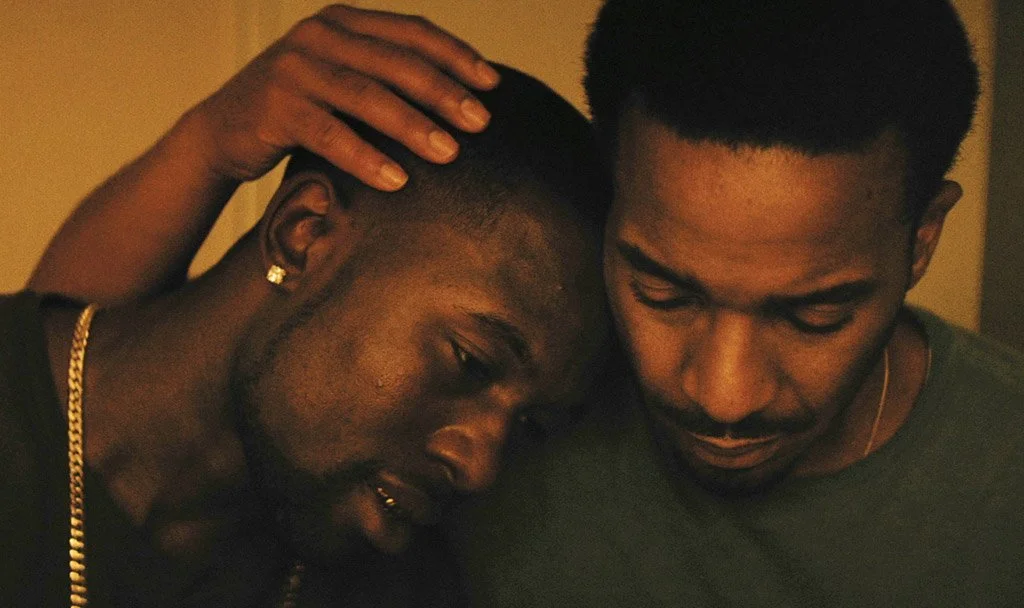
By the time I got to see the film, in a private screening arranged for me in Beverly Hills weeks before its October 2016 release, the hype around Moonlight was solidified, having also premiered at other festivals including TIFF. The achingly beautiful picture about a Black boy named Chiron from the projects of Miami had already been dubbed a contender for the coming year’s Oscars, and deservedly so. Anchored by the masterfully restrained performances of co-leads Alex R. Hibbert, Ashton Sanders and Trevante Rhodes, who all play Chiron at different ages, the triptych drama also features Naomie Harris, Mahershala Ali and Janelle Monáe in her feature film debut. Barry Jenkins’s direction paired with James Laxton’s rich cinematography and Nicholas Brittell’s hauntingly sublime score transformed what could’ve been an exploitation of stereotypes into a deeply personal exploration of lives not often rendered on the big screen.
I was taken by the film’s story itself, an homage to Black life and the complex reality that a neighbourhood drug dealer can also be a father figure for a Black child coming into his own masculinity and sexual identity. Learning that it was based on the unproduced, semi-autobiographical play In Moonlight Black Boys Look Blue by McCraney, and a blending of both his and Jenkins’s childhoods in Miami’s Liberty City neighbourhood as children of mothers who were also addicts—the pair went to the same elementary and middle schools at the same time, but did not know each other before joining forces for the film—affirmed an authenticity that was never in question.
“I’m a guy from the projects who got together with a playwright from the projects to make a movie about a gay Black kid from the projects,” Jenkins told Indiewire in 2016. “The whole point of making it was for people who might’ve grown up under similar circumstances.”
But just because Moonlight was indeed a great movie didn’t guarantee its success, at the box office or in formal industry accolades. The coming-of-age narrative and unconventional story structure with no at-the-time-mega stars had a steep hill to climb. It was the cultural and community embrace after its release, evidenced by the more than $60 million the film brought in globally on a $1.5 million budget, that especially continues to push the art along.
Of course, Moonlight did make it to the Promised Land, claiming a place in history as the first film with an all-Black cast to win Best Picture at the Oscars (which was initially given to La La Land in a mix-up known as “envelopegate”). It was also the first film with a queer lead character to win the top award from the industry’s most revered body, and Ali’s win for supporting actor made him the first Muslim actor to take home a statue. A host of other honours were bestowed along the way, including awards for the entire acting ensemble as well as a MTV Movie & TV Awards win for Best Kiss for Sanders and Jharrel Jerome, who plays Chiron’s first sexual partner.
“In our collective bearing witness, we continue to be transformed by possibility realized and offered a gift of courage and audacity that keeps on giving.”
Moonlight’s impact, 10 years later, however, is not measured in the trophies sitting on the cast and creators’ mantles. It also shouldn’t be measured in the film and TV productions that have debuted in its wake that ooze its influence, from Wanuri Kahiu’s Rafiki and Trey Edward Shults’s Waves to Katori Hall’s strip club drama P-Valley and the recent release, Walter Thompson-Hernández’s If I Go Will They Miss Me. Even one of the most banned books in the United States, George M. Johnson’s “memoir-manifesto” All Boys Aren’t Blue, is partially inspired by Moonlight. The reality is that the picture’s enduring influence could never be easily measured, as timeless and forever timely art both captures and transcends the moment in which it is released.
Then there are the less tangible and less visible, but deeply felt manifestations of how Moonlight made and makes a difference among those migrating toward their own freedom: Black men navigating the pressures of survival and masculinity; parents and parent-like figures rising to the occasion of openly loving and accepting their queer and trans children; the people who, for the first time, saw a film with no white people in it and were invited to confront their discomfort; or those who witnessed versions of ourselves accomplish the so-called unaccomplishable, on screen and off, from the projects to Hollywood and beyond. In our collective bearing witness, we continue to be transformed by possibility realized and offered a gift of courage and audacity that keeps on giving.
Moonlight was a bold, uncompromising vision that demanded culture’s attention, and refuses to let go. As the history and cultural legacy of Black Americans continues to be erased and recast; as queer culture and realities are censored; as news and media retreat from barely-six-years-old commitments toward diversity and inclusion; as we navigate what the Lemkin Institute for Genocide Prevention and Human Security describes as the “early to middle stages of a genocidal process against trans people,” I’m encouraged by its example to, as the classic gospel song says, “run on and see what the end’s gonna be.” To dream an impossible dream and reach an unreachable star, like Man of La Mancha.
McCraney’s speech from the Oscars stage, after winning best adapted screenplay alongside Jenkins, often replays in my head, having watched it live from the press room.
“This goes out to all those Black and brown boys and girls and non genderconforming who don’t see themselves,” he said. “We’re trying to show you you, and us.”
Moonlight was always intended as a mirror. What we each do as a result of what we see looking back at us remains our choice to make.

 Why you can trust Xtra