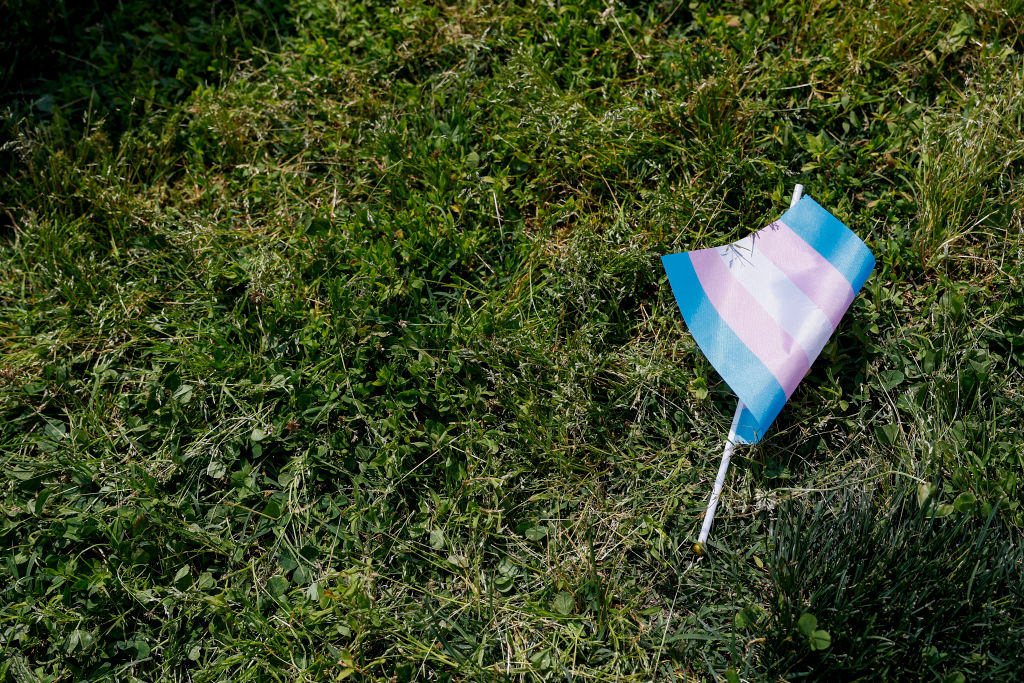
A new report from Statistics Canada is raising concerns among some members of the LGBTQ2S+ community after finding that national public support for gender expression is declining.
The agency conducted a series of surveys in 2018 and again in 2025 to measure people’s perceptions of gender, gender expression and gender equality.
The latest results released in May show that fewer people agreed that individuals should be free to express their gender however they choose in 2025 compared with 2018.
“Among women, the proportion who agreed decreased from 85 percent in 2018 to 77 percent in 2025. Among men, the decrease was from 78 percent to 70 percent,” the report noted.
To gain a better picture of what’s causing this change in attitudes, Xtra spoke with a researcher and two trans rights advocates who lay the blame with the media, anti-trans politicians and online clout chasers.
“There’s an increased visibility around transness, but we’re also seeing an incredible amount of disinformation that’s being put out there, positioning trans people as a threat or a danger to society,” Victoria Bucholtz, executive director of TransAction Alberta, says.
“We’re seeing powerful media influencers like J.K. Rowling and Riley Gaines telling cisgender women that trans women are a threat to them,” she says. “Those campaigns are very powerful and very effective.”
Bucholtz believes that greater media coverage of this negative rhetoric has affected people’s attitudes and caused a “massive explosion” of anti-trans policies in countries like Canada, the U.S. and the U.K.
“What we’ve seen is a complete normalization of transphobia,” she says. “And it’s really pushing into conservative movements here in Canada.
“Pierre Poilievre, Danielle Smith, Scott Moe, all these politicians have swung heavily into what we call ‘Maple MAGA rhetoric,’ where they’re embracing a lot of these culture war issues to drum up support.”
Part of this reaction is what California-based activist Andrea James describes as a “backlash” to increased acceptance and visibility of trans people.
“We had an unprecedented run between approximately 1995 and 2015, where trans people were able to connect and share knowledge in a way that simply never happened before because of the internet,” she explains.
“During that 20-year period, trans people made a lot of progress as a community. But positive visibility in the media peaked around 2015,” she adds. “Caitlyn Jenner’s coming out was a watershed moment. Laverne Cox on the cover of TIME magazine was another one.”
“Now the pendulum is swinging in a different direction. The trans rights movement entered a decadent phase and a lot of young people were unprepared or had never experienced a backlash like the way I and many others did after the AIDS epidemic,” she says. “I think by the end of the 2010s, it became socially acceptable in many places to express anti-trans hate.”
@xtramagazine More adults in the United States identify as queer or trans than ever before, according to a new HRC report. But the organization is warning that the Trump administration’s attacks on population data collection may threaten public knowledge of changes in sexual orientation and gender identity demographics in the years to come. The Human Rights Campaign found that 12 percent of adults in the U.S. identified themselves as LGBTQ+, a large increase from Gallup’s most recent estimates of 9 percent. THe HRC also found that one in five LGBTQ+ adults identify as gender-diverse. And of LGBTQ+ adults in the U.S, 30 percent identified as lesbian or gay, with a whopping 65 percent identifying as bisexual, pansexual or another non-gay/non-straight sexuality. But, the HRC report also included a warning about the future of access to data like this. Since taking office for his second term in January 2025, Trump’s administration has attacked government collection of data, particularly when it comes to gender and identity. “Removing LGBTQ+ people from federal data collection does not make our communities disappear; it makes them harder to see, understand, and serve,” the report reads. We break down what you need to know. 🌈 #lgbtqnews #unitedstates #gay #trans #gaynews ♬ original sound – Xtra Magazine
James runs the free website Transgender Map, which provides online education about trans issues, as well as the social, legal and medical ways to transition.
She says the COVID-19 pandemic and the rise of the “parental rights” movement have also worked to galvanize people worldwide around anti-trans activism in recent years.
“What’s happening in the U.S. and the U.K. is also happening in Canada,” she said. “Canadian anti-trans people are looking at those successes in their view and trying to replicate them.”
The impact of the Canadian public’s changing attitudes and how it shows up in day-to-day life is something that researchers at Toronto Metropolitan University (TMU) have been exploring in recent years.
In her latest study, which examines the well-being of trans and gender-diverse adults, TMU psychology associate professor Sarah Dermody found that negative experiences like being misgendered resulted in increased anxiety, depression and substance use.
“What we see is that these different layers of discrimination and negative attitudes toward trans individuals can infiltrate and affect the trans community at the individual level,” Dermody explains. “Even if someone is not being directly targeted, this hostile climate can have an effect on their daily experience.
“But it’s important to look at the resilience of the community and how gender euphoria and feeling fully embodied and accepted in their gender can really be an empowering and positive experience,” she adds. “Supporting people in developing that experience can be really beneficial.”
Despite the recent decline in acceptance, support for trans people is still overwhelmingly high at 77 percent among women and 70 percent of men.
“Looking at how much money anti-trans groups spend and how much airtime they take up, this actually shows that they’ve been pretty ineffective,” Bucholtz says.
She adds, “If people really supported [the anti-trans movement], it would have a larger impact. We have one of the most powerful politicians in the world, Donald Trump, constantly demonizing trans people, and yet, the support for trans people remains.”

 Why you can trust Xtra