My partner and I didn’t exactly know we had a queer relationship when we got together.
Growing up in an evangelical Christian community in Winnipeg, Manitoba, I’d been taught to get married young and have babies. This did not appeal. As early as junior high, I decided I’d rebel in my own good-girl way; internally, I thought maybe I would just become a nun. I could even probably live in a convent. In fact, it actually seemed quite nice to just live with a bunch of other women. (I chose not to interrogate that thought at the time.)
Instead, I met somebody.
An impish, quirky sprite of a person. They wore colourful outfits of thrift-store finds—teen-girl skinny jeans and grandpa sweaters. They shaved their head annually then let their hair grow long until the following year. They always stood on one leg with the other up and bent like a flamingo. They were serious, thought deeply about important things, but they were also very silly, always singing nonsense songs. If I could make them laugh, they would erupt in a high, fast-paced giggle, head thrown back, their eyes glinting with pure happiness.
We met doing Christian “service work” not too long after we’d both graduated high school. This was not a far cry from the path of finding someone at Bible college (the dreaded “MRS degree”) that I’d been trying not to follow. Yet, reader, I married them—at 21.
Despite our seemingly traditional path, we did always feel queer—as in different, strange. Neither of us wanted to have children, a strong expectation we both felt. (They grew up in a similarly evangelical Christian community in the U.S.) There were many ways we were treated as a married couple that we didn’t like. Servers handing the bill to them without asking, even though I always paid; people trying to use their last name for me; gatherings that would separate into men on the porch and women in the kitchen, leaving me feeling penned in by my assumed role and them adrift, not fitting into either place.
But we were lucky. We came out to ourselves, and then to each other, in excited and nervous conversations in our cheap Winnipeg apartments. They told me they were not a man and I realized I’d never thought of them as one; they’d always been themself. I told them I was not straight, and we retold the childhood stories we told each other when we first got together, recast in this new light. Four years into marriage, we moved together to Toronto, created a new life in a new city that was all ours. We became, outwardly, the queer couple we always were inside.
But we were still a married couple, a fact that felt strange and put me out of step, at least for the majority of my 20s. “You’re married?” people would ask. “But you’re so young!”
Most of my married friends were cis and most of my queer friends weren’t married. I felt my relationship, like my bisexuality, straddling awkwardly in a liminal, often invisible space. Always feeling “not queer enough,” but definitely not straight.
Stuck in this in-between space, I found myself turning to books. I can’t help it; I’m a writer, I’m always trying to understand life by reading. I thought I could resolve the discomfort of in-betweeness through seeing a representation of my relationship, something in which I could recognize my own experience of marriage. On some level, I wanted an answer to the question: “Are we doing this right?”
Roughly 44 percent of the population is married. For many people, their spouse is the central relationship in their lives. Despite this, there’s not much non-fiction writing on the topic of marriage that doesn’t fall into the category of self-help. What is it about the daily contours of a long-term relationship that resists the form of a memoir? Does marriage lack the “conflict” needed for a story? Is it seen as an unworthy topic for “serious” literature?
Tolstoy famously began Anna Karenina with an assertion that all happy families are alike, but all unhappy families are unhappy in their own unique way. Maybe that’s why, as someone who has been married and enjoying it for nearly 15 years, I don’t see my experience reflected back to me much.
The day-to-day delights and dramas of long-term romantic companionship don’t exactly follow a typical narrative arc. Marriage is continuous; it appears almost static. Like the ocean—a single immoveable body which, if you look closer, has a tide cycling endlessly in and out.
Being married also usually means an intense level of emotional intimacy. While in real life there’s something magical about knowing a person so well, this knowledge is difficult to represent in art. Unlike the singular autobiography of a memoir, a marriage memoir requires also portraying the partner and the partnership, this other person who feels like a part of you but is not you.
Over the first few years that I was married, I found myself drawn to autofiction and memoir that, while not explicitly about marriage, centred around domestic life. Writers like Sheila Heti, Olga Ravn, Kate Zambreno, Olivia Laing and Rachel Cusk write compellingly about the quotidian elements of everyday life out of which they make their art. But much of their writing about their relationship with their respective partners either obscured them or focused more on the couple’s dynamics as parents.
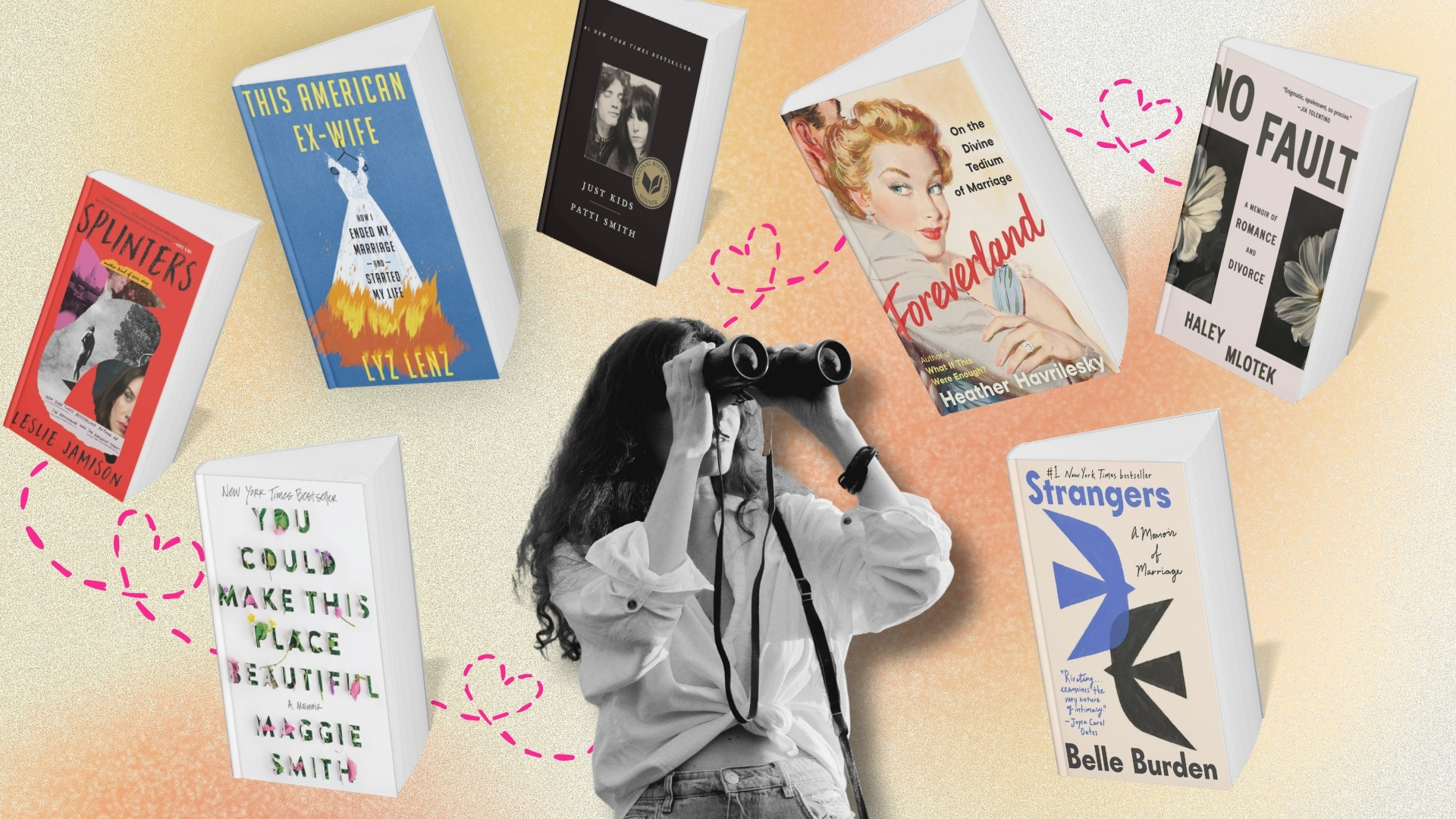
A few years ago, I found a promising entry in the marriage memoir genre, Foreverland: On the Divine Tedium of Marriage (2022) by Heather Havrilesky.
Other than being in a straight relationship, Havrilesky and I seemed similar. She’d been married for over a decade and wanted to write about marriage’s day-to-day struggles and satisfactions. Yet, when I actually read the book, it felt foreign to me.
When the book was released, the New York Post published an eye-rollingly dense article that plucked out jokey quotes from the book and characterized them as hateful. “Wife calls marriage ‘insane,’ hates her husband: ‘Snoring heap of meat’” the headline reads.
The article was ridiculous, and yet I found myself also wondering if Havrilesky disliked her husband. Her writing reminded me of the jokes I used to hear women make at church or extended family gatherings. Their husbands were loud and unruly, gross even—either sex-obsessed or immature. The husbands could never find anything. The husbands couldn’t wash their own clothes or fill the dishwasher properly. The husbands didn’t know how to cook. A therapist would probably call this weaponized incompetence; the women I grew up around just called it, with a laugh or an eye-roll, “men.”
Even today, I sometimes feel a strange pressure when I’m around straight couples to play up an oppositional act, teasing each other for minor faults or relitigating an argument in a way that is supposed to be cute. I don’t find myself doing this as much around other queer couples.
It’s this version of marriage that bothered me, I realized, this version that I don’t recognize in my own: marriage as a fight, marriage at odds.
@xtramagazine There were no trans characters in films released by major studios in 2025. That’s according to GLAAD’s Where We Are in Film study, which examined LGBTQ2S+ representation across 225 films released by 10 major studios in 2025. Not only did none of the tracked films include a single trans character but LGBTQ2S+ representation declined overall. Of the 225 films tracked, only 20.4 percent contained LGBTQ2S+ characters, a decrease from the 23.6 percent inclusive films counted in 2024. Representation has been trending down across the board. LGBTQ2S+ characters are not only in fewer films but they’re also getting less screen time and have less narrative significance. GLAAD president and CEO Sarah Kate Ellis warned that the overall decline in LGBTQ2S+ characters on screen will have long-term impacts. “If the industry doesn’t prioritize investing in films with LGBTQ2S+ characters, it risks losing a generation that will go elsewhere to find entertainment that does include our community.” We break down what you need to know from the annual report. #lgbtqnews #film #glaad #filmnews #lgbtq ♬ original sound – Xtra Magazine
Wondering if this vision of marriage was chafing anyone else, I moved on to mine a much richer vein. The real literary canon of marriage is not the marriage memoir, it’s the divorce memoir. Far more divorce memoirs than marriage memoirs seem to exist, nearly all of them written by women. I read No Fault by Haley Mlotek, I read This American Ex-Wife by Lyz Lenz; Splinters by Leslie Jamison, You Could Make This Place Beautiful by Maggie Smith.
Here was a wealth of work about unhappy marriages, each supposedly so unique. But each seemed to run along the same thematic track: usually a woman who has ambition, artistic vision or a goal in her life, and a man who does not want to support her.
Strangers is the most recent blockbuster addition to the divorce memoir genre. Released in January of this year, it has already sped through nine printings and a movie adaptation is in the works. In it, Belle Burden, the author, relates the story of her husband unexpectedly divulging an affair and abandoning a 21-year relationship.
According to articles in many women’s magazines, something about this story is supposed to feel very relatable. (Per Real Simple: “If a woman who comes from generational wealth can forfeit her financial security in a divorce, are any of us safe?”) Burden’s story is that she was a Vanderbilt heiress swept off her feet by a high-powered lawyer, and put her career on the back burner to care for their three children—so perhaps the fear that resonates with readers is a betrayal of the heterosexual social contract. In marriage, Burden sought a specific feeling of safety and protection, of being “taken care of” (her words). But her husband didn’t hold up his end of the bargain.
While she maintains that she was shocked by her husband’s sudden abandonment and can’t seem to identify major problems with the marriage pre-divorce, Burden does acknowledge that her seemingly “perfect” and “happy” marriage had a lack of emotional intimacy, and hopes for better for her son and daughter. “I hope [that] because I was open about what happened to me, my children will insist on intimacy, on knowing their partner deeply, on being known deeply,” she writes.
The closest thing I’ve ever found to a marriage memoir that I relate to is Patti Smith’s book about her relationship with Robert Mapplethorpe, Just Kids (2010). Like me and my partner, the two had an instant connection. They met young and became lifelong soulmates, first as romantic partners and then as friends and chosen family. They grew together, created things together and supported each other’s artwork. They were a world of two, tucked away in their incense-scented room at the Chelsea hotel. Though the two were never officially married, the story of their relationship is the story I’d been looking for in marriage memoirs.
Maybe it’s an unfair comparison; Smith’s writing about Mapplethorpe is bound to be a bit hagiographic, since it’s about a life cut tragically short. But at the same time, you could also cast the book as a kind of divorce memoir. It traces their sexual and romantic relationship through its dissolution, but the story doesn’t end there. Like many queer relationships, theirs was porous, flexible, less bound by the strictures that straight relationships are.
Ultimately, perhaps this is what I was looking for in reading so many accounts of marriage: a vision of this relationship that was not so narrow. Not so, well, straight.
I’ve long felt conflicted about marriage as an institution, a tradition rooted in property law, in subjugating and erasing the identity of women. This history felt pressing and present in many of the divorce memoirs I read, where women were belittled, litigated and pressured by their (ex) husbands.
There is clearly a dearth of queer marriage memoirs out there, but maybe the fact that I didn’t see my relationship represented is somewhat of a blessing. Trying to find representation, for me, was really a search for validation. What I learned in my reading, was that I didn’t need it.
The day-to-day truth is that I like being married. I like sharing a bed and a bank account. My partner and I don’t have to bridge a male/female divide. We are best friends, we’re on the same team.
Our marriage may not look just like the marriages I read about, but it is a marriage nonetheless. Completely enthralling to us, completely boring from the outside. Together we do what married couples do, navigate the slippery waters of intimacy and interdependence—without steering too far into independence or codependency along the way. That navigation may look different for everyone. All happy marriages are happy in their own way.

 Why you can trust Xtra