In one of the many stunning multi-panel spreads in Tillie Walden’s remarkable Charity and Sylvia, Charity Bryant and Sylvia Drake stand outside with their family members one night in Weybridge, Vermont, gaping in awe at a meteor storm. “Is it an omen? A warning?” asks Sylvia, the more God-fearing of the two. “No, dear,” says Charity. “God is putting on a show for us.” Like many of the scenes in this graphic novel, which tells the fascinating true story of an openly lesbian couple living through the first half of the 19th century, this one is part fact, part informed creative interpretation. Walden deftly reanimates the shared life of her main characters, from her knowledge of the couple gleaned from two years of intensive research into their extensive personal archives.
There really was a meteor storm visible from Weybridge, Vermont, where the women lived, in 1833; Walden can’t know what Charity’s and Sylvia’s reactions to it were, but she uses the astronomical event to illustrate their decades-spanning romantic partnership, which began in 1807 and lasted until Charity’s death in 1851. Sylvia, who has not had any involvement with women before she meets Charity, is much more anxious about the consequences of their shared “life of sin” while Charity, who has already endured gossip in her hometown in Massachusetts about how she has “far too many ladies about her,” staunchly defends her life and desires.
The two women face some judgment and scrutiny when they first begin to live together. Together, they start a tailoring business in Middlebury, Vermont, not far from Sylvia’s family in Weybridge, a decision that Sylvia’s mother, who has been trying to interest Sylvia in local men, deems “quite uncommon.” However, Charity and Sylvia is less a story of early 19th-century queer repression than it is a quietly vibrant tale of two women who, through their own steadfastness and the bemused support of the people in their community, lived together for decades, never married or had children, ran their own business and were more or less accepted as a lesbian couple.
Walden, who published her first graphic novel at 18 (The End of Summer), is best known for her Eisner Award-winning graphic memoir Spinning, and has released 15 books to date. Charity and Sylvia is her first work of historical fiction. Though it is Walden’s first book to have required deep archival research, it is impressively confident and detailed. With a loving eye, and the help of their copious diaries and letters, she writes and draws everything from the women’s daily routines and the mundane objects in their home, to the social, political and religious questions that preoccupy them; their familial and community relationships; and the animated conversations and intimacies of their shared life.
Walden packs each page with images and information, making the smart choice to divide each page into 12 panels for maximum content. The task of taking us through nearly half a century is demanding, but Walden is equal to it. She knows when to zoom out, cycling us through the seasonal delights and labours of their lives, and when to slow down and bring the reader into certain pivotal moments and experiences. One particularly harrowing river crossing on a trip to visit Charity’s family warrants a full two-page spread, the panels roiling with stormy waves, Sylvia and Charity’s figures dwarfed by the threatening water, as they cling to each other, barely making it to the other shore.
This being the first half of the 19th century, premature deaths and illnesses are frequent occurrences in the lives of both women. Charity especially endures the early deaths of nearly all her siblings, and is increasingly sick with heart disease in the last decade of her life. Walden imbues this difficult period with some humour. “If you should leave me prematurely, I shall ensure your soul has no rest,” Sylvia tells Charity. “Well, I must take care and not die too soon, then,” Charity replies. Meanwhile, as they move through the years, the U.S., only one year older than Charity herself, goes through presidents, wars, rebellions, strange weather, plagues and the development of the anti-slavery movement.
Walden punctuates these more sober themes with a healthy dose of queer happiness, including many instances of quiet support from the women’s community. Some years into their relationship, Charity asks her brother Peter to buy a ring for Sylvia on her behalf, and he obliges. Their friend Reverend Eli Moody is far more concerned with preaching about the sin of slavery than he is about two women in a domestic partnership. Their niece, the irrepressible Achsah, loves them dearly and is inspired by their independence to pursue her own studies rather than get married young. Walden includes an endearing scene in which, several years into their partnership, weighed down by the grinding work of tailoring, Sylvia expresses her worry that she and Charity are becoming distant from each other. This prompts a heart-to-heart. Sylvia wishes Charity would comment on her beauty more often, while Charity wishes Sylvia would take her time while dressing her in the morning—then perhaps “I might appreciate the touch of your gentle hands,” Charity says. No lesbian bed death for these two!
Charity’s nephew, renowned poet William Cullen Bryant, wrote an affectionate description of his aunts in his book Letters of a Traveler; Or, Notes of Things Seen in Europe and America, which Walden includes at the end of Charity and Sylvia: “they took to each other as companions for life … [in a] union, no less sacred than the tie of marriage.” He goes on to mention that their shared home is surrounded by flowers, that they have many friends among their neighbours and that they take care of each other devotedly, sharing both finances and a bed, and that when Charity became ill, their community rallied around them. It is incredibly moving to read this public record of Sylvia and Charity’s love, written during their lifetimes. It is moving too, to read Walden’s contemporary depiction of how that love was able to take root and endure, of how instead of being ostracized or forced back in the closet, they were able to grow old together, supporting themselves with their tailoring work, and surrounded by friends and family, despite their many losses and Charity’s fluctuating health.
The research, writing and drawing processes for this book were clearly both arduous and rewarding: Walden has made an entire website in order to fully document her sources as well as her storyboarding and preparatory sketches. The bibliography section is divided into five lengthy portions, to mirror the five sections of the book, and includes archival drawings, paintings, newspaper announcements and maps from the Vermont of Charity and Sylvia’s era. It also contains notes on the many primary sources Walden accessed at the Henry Sheldon Museum in Middlebury, where the majority of the women’s papers are kept. The website is both absorbing and generous. Walden shares her extensive sources and writing and drawing drafts with those of us who are curious to know more about her two subjects and also, through this careful documentation, provides other artists with a guiding framework for how they too might approach creating a graphic novel about historical figures who are not widely known—perhaps other queer and trans ancestors who lived in the centuries before our own.
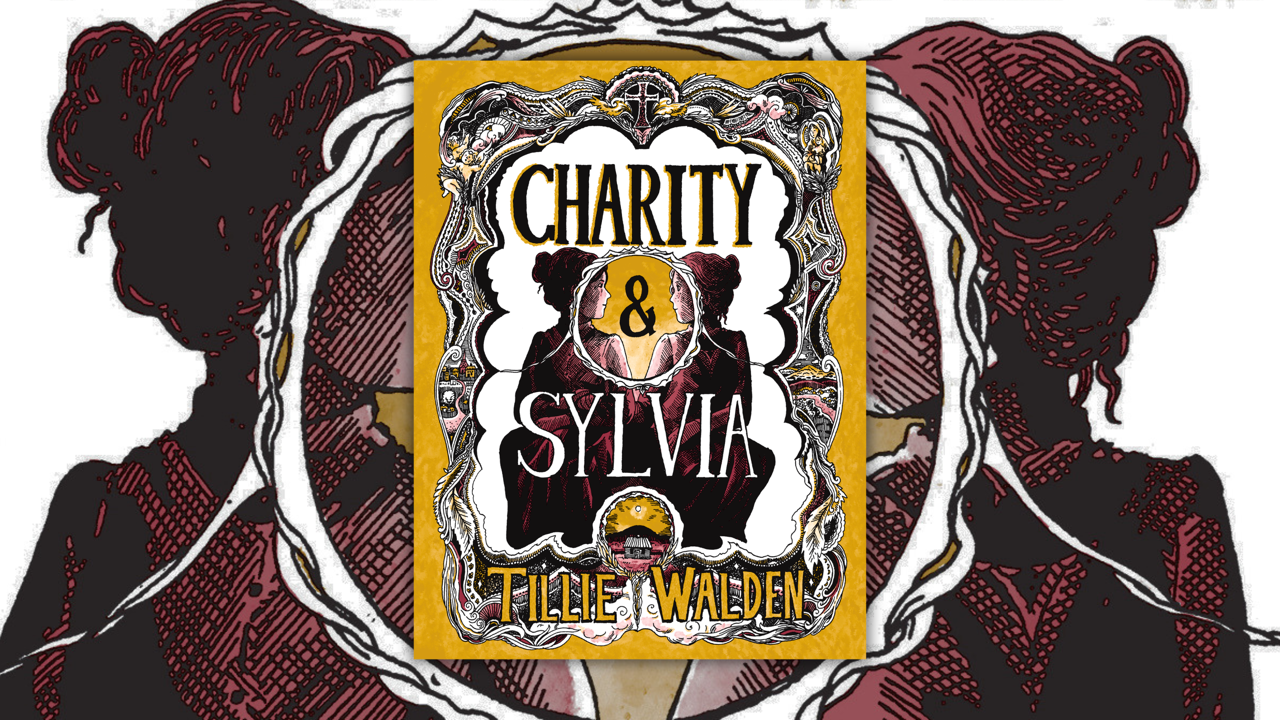
One notable image in Walden’s bibliography is the one likeness of Charity and Sylvia that exists: a silhouette portrait they sat for together early in their relationship, circa 1811. We can’t really see their features, except the shape of their necks, their noses, their chins, their hairstyles. Likewise, Walden can only give us impressions of these women, filling in the shadowed parts, the private intimacies and arguments, doubts and joys, with her research and imagination and her own knowledge of queer life and partnership. And yet, through the care and energy of her pen, Charity Bryant and Sylvia Drake emerge from these pages with an immediacy and vivaciousness that makes it hard to believe that they lived out their entwined lives almost 200 years ago.

 Why you can trust Xtra