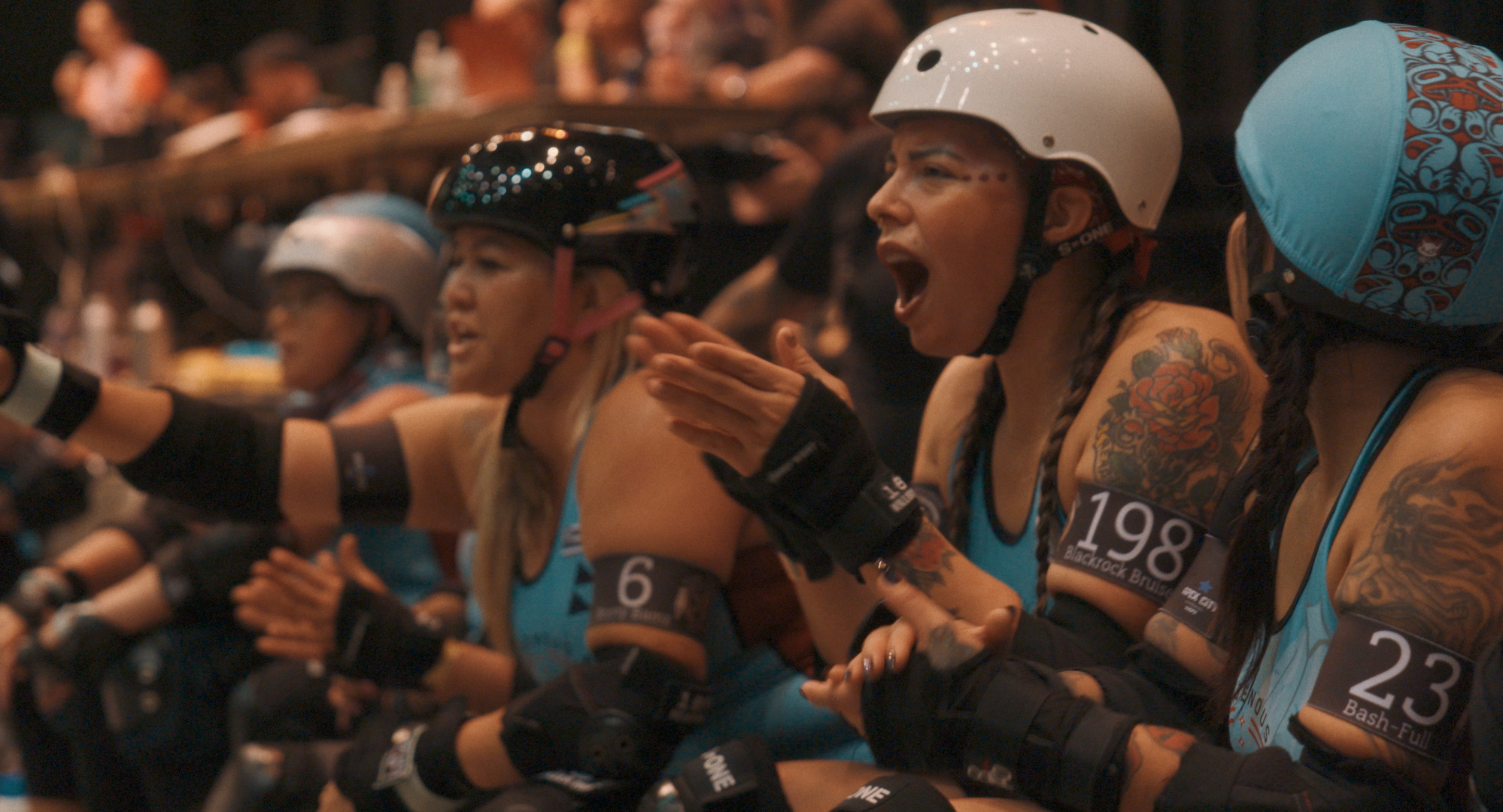
To an outsider, roller derby games might look like pure chaos: bodies slam across skating rinks as players skate circles around one another. That scrappy sensibility is part of the sport’s soul—it’s a DIY game with feminist roots, a place for people with marginalized genders to get up close and personal with one another. Many queer people find their chosen family on the derby track. “The beauty and the power of roller derby,” says player Hawaiian Blaze in the new documentary Rising Through the Fray, “is that the community is there.”
Blaze is one of the players expanding the boundaries of roller derby, as part of the team Indigenous Rising. The first borderless team—a team not defined by international borders—to compete at the Roller Derby World Cup, Indigenous Rising has paved a path for stronger BIPOC representation in the sport while resisting its colonial frameworks. Rising Through the Fray tells Indigenous Rising’s story, following the team through a series of tournaments. Through intimate conversations, shared meals and fierce gameplay, director Courtney Montour shows how Indigenous Rising is a force for change in derby, and a wellspring of love and healing for Indigenous players. “We have created a family that no one can deny,” says veteran player Sour Cherry as the film comes to a close.
Ahead of the film’s theatrical release in Canada, Xtra spoke with director Courtney Montour about Indigenous Rising’s impact, the film’s collaborative process and the future of derby.
Before we dive into talking about the movie, what is your relationship to roller derby? What does the sport mean to you?
I absolutely love roller derby. I’m Kanien’kehá:ka from Kahnawà:ke. Growing up very close to Montreal, where we have one of the best leagues in the world, it was something I stumbled upon in my twenties and just fell in love with. To see an open queer space, with women and non-binary individuals all on the track, competing in a full-contact sport on skates—what is not to love about that? I’m not a sports person, but this sport for me was, and is, a queer, welcoming space.
You discovered Indigenous Rising by reading about them in your local newspaper. What made you go, “I need to do a documentary about this?”
Reading that first article at the end of 2017, that Indigenous Rising were debuting at the World Cup in Manchester, my jaw just dropped. I already loved the sport, and to see a team of Indigenous women players from around the world, collectively representing their nations on this large scale, was groundbreaking. I was just filled with an immense sense of pride. Before then, to play at the World Cup, you needed to represent a country, and they stood up and said, “No. We don’t want to represent and identify with the colonial borders that were put upon us.” The world needs to know about this team.
The film follows three players in particular: Sour Cherry, Krispy and Hawaiian Blaze. Their stories take different forms, but for all of them derby seems to be a place where they can connect with themselves. For Krispy, that means a sense of cultural pride and exploring her Cherokee identity; Hawaiian Blaze, who identifies as Māhū and queer, met the love of their life in derby. How did you decide to focus on these players?
Sour Cherry was somebody who I wanted to be a part of the film from the beginning because she was one of the original teammates who went to the World Cup, and she’s a veteran player in the sport. Sour Cherry brought modern-day roller derby to Canada—she was one of the founders of modern-day roller derby about 20 years ago. For that to be an Indigenous woman is something I wanted to bring to light and celebrate.
Krispy and Hawaiian Blaze both came on board as we started filming at tournaments. I wanted to highlight very different stories of separation and disconnection from community and identity, because even though their three stories are so different, it’s something that people across this country and beyond can relate to, even if they’re not Indigenous. The sense of trying to find out who you are and that sense of belonging.
What was the experience of filming like? How did it feel stepping into the world of Team Indigenous Rising?
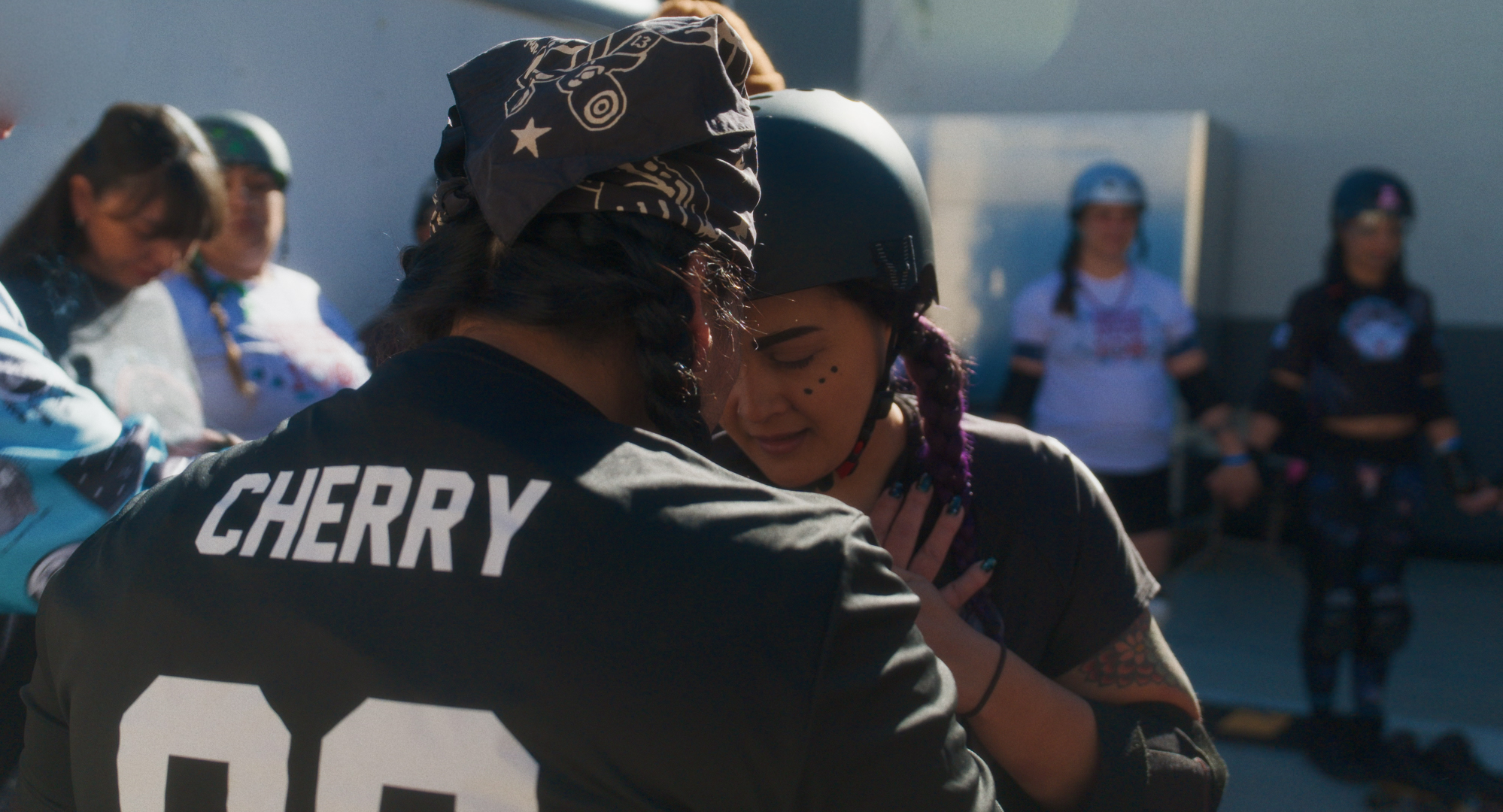
This film was a long, slow, collaborative process. I think that’s really important in a documentary and when people are sharing such intimate details about their lives. This all started back in 2018. When the team came back from the World Cup, I reached out and we organized to meet up at RollerCon in Las Vegas, which is the largest annual roller derby gathering in the world. I went there without cameras to spend the weekend with them and see if we wanted to go forward with making a documentary. The production company I worked with, Nish Media, which is also Indigenous, truly believed in the process. At RollerCon, I saw the spark of this movement that was about to be created. There were conversations happening there, publicly—workshops on allyship run by Indigenous Rising—and then smaller, closed meetings with BIPOC players in roller derby talking about wanting change.
During COVID, the sport shut down until about 2023. Rising Through The Fray follows that first moment when the team reorganizes as Indigenous Rising in Louisiana for the Y’allstars tournament. In Louisiana, I again spent a lot of time without cameras, sitting in on some of their team meetings, having meals together. Spending that time together with their team and with my crew was really important.
Credit: Courtesy Nish Media
There’s a scene where Hawaiian Blaze speaks about how it’s okay to be aggressive in this sport—it’s seen as helping your friends. That’s such a nice inversion of how women and gender-diverse people, and Indigenous women in particular, are often punished for being tough or taking up space. How did you approach the aggression of derby in this film?
I always wanted to weave and balance roller derby with the importance of what Indigenous Rising represents, and that’s creating space for community and dialogue, and relationship-building for Indigenous folk in roller derby. That’s really what grounded it for me. The film intentionally chooses to follow moments in the game, so we get to see the full contact, high-intensity level of the sport, but I think it’s shown in a nuanced way. The focus of Rising Through the Fray is the team on the bench and in the locker room, and the moments they’re getting ready together, and when they’re in ceremony smudging. There’s a stigma sometimes, as you said, about how a sport should be played or portrayed, and Indigenous Rising is showing the beauty and the family and the relationships behind that.
Can you speak to the role that finding and creating family plays in the film?
Roller derby, like other sports, or other places in society, can feel very isolating when you don’t see yourself reflected in society and in those spaces. So for me that’s where the focus went, to really show the importance of the space the team has created. They’re able to do that by welcoming players from multiple Indigenous Nations. Currently, they have over 30 Indigenous Nations on their roster. There’s a shared lived experience that you’re starting from that doesn’t need explaining. That is what has helped inspire Sour Cherry, Krispy and Hawaiian Blaze to feel connected to their own cultures and communities.
Do you see derby improving when it comes to diversity and colonial barriers within the sport?
I think roller derby, like any space in our society, is making changes, and Indigenous Rising is part of that change. The borderless teams that now exist are part of that change. And there are now multiple tournaments that allow borderless teams, not only [teams representing] states, provinces or countries. That’s an incredible change. And the sport continues to evolve. I know just recently, the Women’s Flat Track Derby Association is looking at renaming the official organization, because roller derby is so gender-diverse.
Did this film change your perspective on the sport at all?
I picked up roller skating! My whole crew, we all bought roller skates together, and I continue to roller skate. Filming Rising Through the Fray has just deepened my love for the sport.
It’s a bleak political moment in many ways right now, with so much backlash against diversity and inclusion, against trans and queer people, against marginalized communities. This movie really feels like an antidote to that. What do you hope that audiences might take away from it?
I want audiences to see the strength and the resiliency that Indigenous Rising brings to the track. The space for representation that they’ve created and that anybody—from any culture and background—can see themselves reflected in the stories of belonging and finding oneself.
This interview has been edited for length and clarity.

 Why you can trust Xtra