Hungary’s prime minister tried to ban Pride. Thousands showed up anyway

Despite Viktor Orbán's right-wing populist government banning Pride, Budapest might have just had the largest Pride parade in its history

Hungary might have just had the largest LGBTQ2S+ Pride parade in the country’s history—and it wasn’t even allowed to happen.

In March, Prime Minister Viktor Orbán’s right-wing populist government passed a constitutional amendment banning public events that “depict or promote” homosexuality to minors, specifically targeting Budapest’s annual Pride parade.

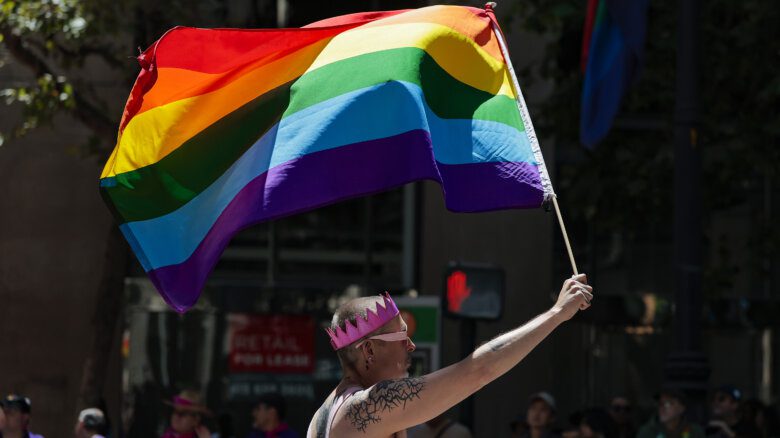
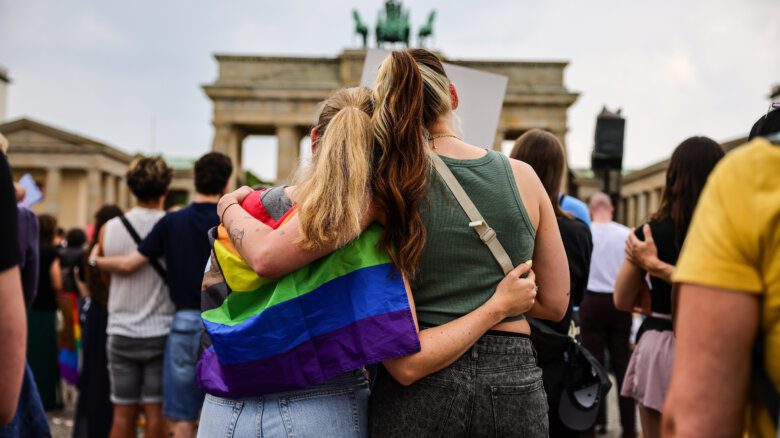
But the ban didn’t stop an estimated 100,000 people from celebrating Pride anyway over the weekend—and they risked threats of potential police action, newly approved facial recognition tools to identify attendees and heavy fines to do so. 

The ban is the latest attack on LGBTQ2S+ rights from Orbán’s government, which has ended any legal recognition of trans people, made it illegal for same-sex couples to adopt children and required disclaimers for books featuring “non-traditional families.” Orbán later called the march “repulsive and shameful” and accused the EU of organizing the event to defy his government.

But the sheer size and scope of the demonstration shows that Orbán is not representative of his people. It’s a good reminder that while “Pride” has become more of a fun celebration backed by rainbow capitalist sponsors over the years, the history of Pride is directly tied to political action and protest—and that sentiment is still relevant today.


Cody Corrall is Xtra's Social Video Producer. Their work has appeared in BuzzFeed News, TechCrunch, the Chicago Reader, CINE-FILE, Thrillist, Paste Magazine, and other places on the world wide web. He lives in Chicago and speaks English.

Senior editor Mel Woods is an English-speaking Vancouver-based writer, editor and audio producer and a former associate editor with HuffPost Canada. A proud prairie queer and ranch dressing expert, their work has also appeared in Vice, Slate, the Tyee, the CBC, the Globe and Mail and the Walrus.

Read More About:
Power, Video, Activism, Politics, Video, Pride, Europe

Keep Reading

A nonbinary person injects hormones with a syringe

What HRT Cafe’s shutdown means for DIY care

HRT Cafe was the largest access point for DIY transition care in the U.K. before it suddenly vanished
Urania, a feminist journal from the 20th century that challenged the gender binary.

The 20th-century journal that challenged the gender binary

From 1916 to 1940, “Urania” imagined a world beyond gender—and documented feminist movements around the globe

U.S. Supreme Court blocks California policy protecting students from forced outing

The ruling is the latest case to tackle parental rights and religion in public schools

What the Barry Neufeld tribunal ruling means for trans rights in Canada

A former Chilliwack school trustee has been ordered to pay $750,000 after years of anti-LGBTQ2S+ posts