There is a school of thought that consigned Tennessee Williams to the recycling bin of theatre history. His work was scorned and he was derided in his lifetime mainly on the basis of his accusers’ homo- phobia. Recently in Canada, productions of his work have often come under sneak attack, with Williams being fingered as a part of the Dead White (and in his case, American) Male Syndrome.
The extra virulence of the hostility directed against Williams has roots, of course, in the long if discreditable history of claims that his great female characters are actually drag queens in disguise; the same hoary old lie used against Edward Albee. It is unfortunate that Williams’ plays are still coping with issues more connected to his life than his art.
Watching the CanStage production of The Glass Menagerie without those prejudices is to enter a heartbreaking world of strength and failure, vitality and betrayal. His characters use language to highlight their emotions and conflicts, not to hide or repress them.
A near perfect example of this is the transcendent scene between Laura and her Gentleman Caller, the heart of this play and one of the high points in the history of English language drama.
Thankfully CanStage’s production of this scene is triumphantly successful, a tour de force thanks to director Chris Abraham and actors Seann Gallagher and Michelle Monteith.
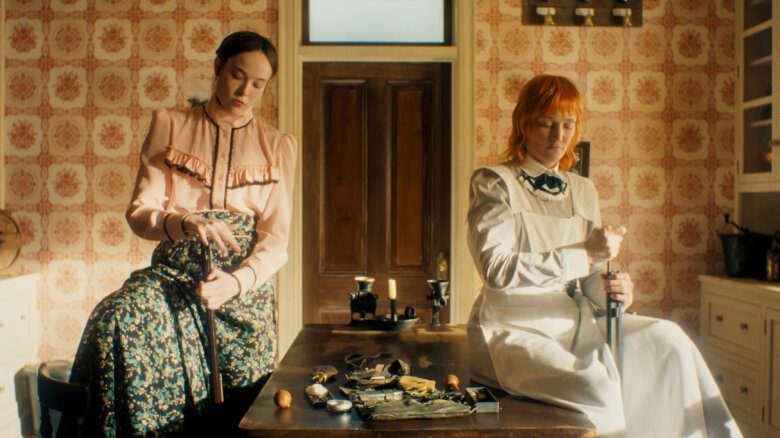
It would be difficult for the rest of the evening to reach this level. However this production has the advantage of a fine realistic set designed by Guido Tondino and Victoria Zimski, a lighting design by Luc Prairie that would be difficult to improve upon and a wonderful group of character-defining costumes created by Barbara Rowe.
While Gallagher and Monteith are note perfect in their scenes together, Damien Atkins does a fine job of grounding the play in the steely ambivalence of Tom’s single-minded selfishness.
Meanwhile in Rosemary Duns-more’s performance, and presumably in director Abraham’s vision of the play, it is Amanda Wingfield’s anger rather than her hurt that is emphasized.
Williams’ Amanda is a lot more complicated than this. In his version the audience is uncertain. Is she making up that whole Delta girlhood along with all those admiring suitors? Has she constructed a past for herself like those magazine stories she is selling to her lady friends? Why did that husband run away from her? As written, she is an almost mythical figure who embodies the human desire to create comforting personal legends from skewed and misremembered realities.
Instead, Abraham and Duns-more’s version concentrates on the more mundane reality of an angry woman embittered by a failed middle-class existence. Ravaged by the Depression and abandoned by a drunken husband, Amanda directs her anger at her failing adult children, especially at the son who seems to be a facsimile of his deadbeat dad. An explanation designed for reality- based audiences, disappointing to those hoping for poetry.
 Why you can trust Xtra