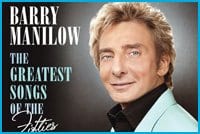
So when did Barry Manilow become Connie Francis? And not the cute 1950s freshly scrubbed “Who’s Sorry Now” Connie. I’m talking the lip-synching, bipolar, plastic-surgery-enhanced Connie from her camp mid-’70s “as seen on TV” Greatest Hits commercials.
On a recent Martha show, Manilow sang to Stewart’s sweater-set audience like some flashy Liberace/Herman Munster hybrid. His “flameboyant” hand gestures and cartoonish eye-popping (due to major facial tightening) was insanely captivating. But his wholesome, matter-of-fact singing style has as much feeling and compassion as God-fearing Lawrence Welk singers.
His new release, The Greatest Songs Of The Fifties, is Manilow’s first chart-topping album since 1977. After the financial success of Rod Stewart’s hokey American Song Book collections and Il Divo’s studly fake opera pop, record mogul Clive Davis thought Manilow doing 1950s covers would “breathe new life and vitality into these truly wonderful songs.”
Nice try. The whole album drips of obvious, manipulative sentimental sludge. The arrangements are more antiseptic than some of the original versions. The life is sucked out of every damn song.
The 13 song choices are a hodgepodge. “Unchained Melody,” “Venus,” “What A Difference A Day Makes” and “Moments To Remember” are a few of the butchered classics here to savour. I love most of these songs but Manilow doesn’t do anything with them. He’s too old and too fey to kick any life into teenaged Frankie Avalon’s delightful “Venus.” It’s sadly creepy here.
Bobby Darin’s classic kick-ass version of “Beyond The Sea” was swinging yet managed to be ultra romantic. It was a grand and sexy recording with Darin’s smooth controlled chops pumping every line with gusto. Manilow’s version is bathed in synthesized tinkles, cheese guitars and strings. His singing is so asexual. When he sings, “We’ll meet beyond the shore/ We’ll kiss just as before/ Happy we’ll be beyond the sea/ And never again will I go sailing,” I swear you will feel nothing. Nada.
The only refreshing thing on the album is hearing Phyllis McGuire of the ’50s singing sensations The McGuire Sisters. She duets with Manilow on her old hit “Sincerely” (with a touch of “Teach Me Tonight” added to the mix). McGuire’s voice sounds amazing over the sanitary ham-fest production. She belts it like a trooper. She’s fun and flirty, something Manilow isn’t and never will be.
San Francisco based DIY multi-instrumentalist Kelley Stoltz’s new album, Below The Branches, is a chaotic blend of pretty melodies and silly sweet nothings. The influences are music-lover geekish. Very 21st-century boy, if you will. Every indie dude from Sufjan Stevens to Bright Eyes’ Conor Oberst is hip to the trend. Think Nick Drake with a dash of George, Paul and John solo works.
Stoltz’s tortured soul thing is getting a bit tired. But he seems to be having so much fun on the album. His quirky voice crackles and mumbles happily through his ragtag yet proficient musicianship. Thank the gods; he doesn’t take himself too seriously.
The lyrics are enchantingly childlike. “Birdies Singing” is a perfect example of this. It starts with twangy guitar picking and roadhouse drumming and then even more screechy, chunky guitars join in as the song marches forward. “And high above/ A sky above I hear a buzzing/ I hear a winging,” Stoltz sings. “Listen close and hear the birdies singing.”
On “Ever Thought Of Coming Back,” Stoltz kicks up the Beach Boy harmonies to camp effect in a song that coaxes Jesus into a little second coming. “Jesus Christ/ What have you been doing all this time/ The clouds are nice/ You know I enjoy them on my mind/ But if you ever thought of coming back/ Well now is the time.”
 Why you can trust Xtra