Who?
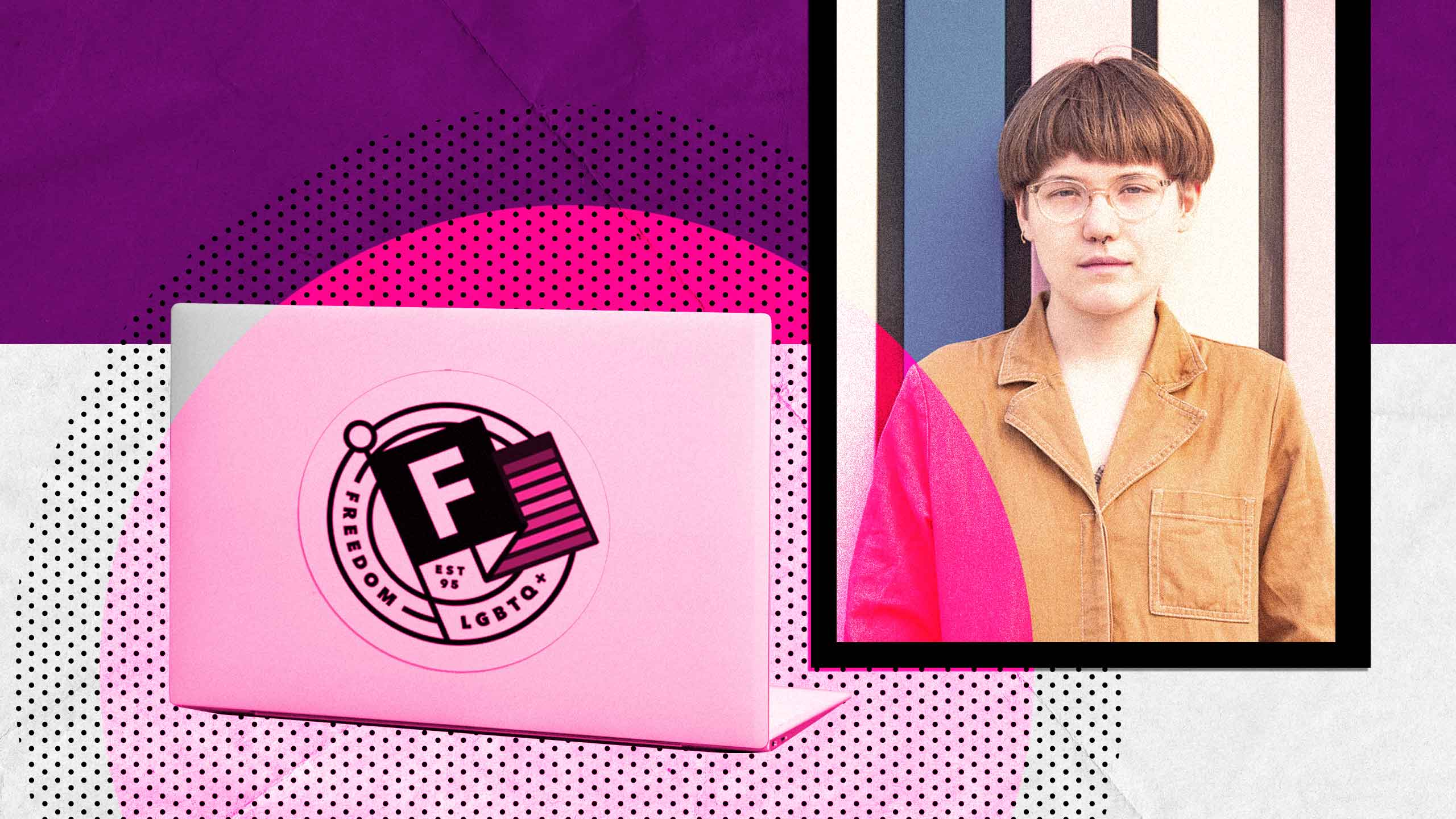
I’m a queer and non-binary 23-year-old working at Bristol24/7, the biggest independent magazine in South West England. I live in Southville with two friends in a terraced house in Bristol, U.K.
What?
Freedom Youth is a group for young LGBTQ+ people founded more than 25 years ago, and believed to be one of the oldest social and support groups of its kind in the country. As a queer and non-binary 23-year-old, I’m one of the older members of the group, but Freedom and its leaders have been by my side since I was 20 years old, when I had just moved to the city and was desperately searching for queer community.
I joined to find friendship and support but received so much more than I could have ever hoped for. Freedom Youth is a place that has not only helped me feel less alone as a young queer person, but it’s been a place where love in all its senses has blossomed: I have met my best friends through the group, learnt so much about queer history and always feel respected and cared for.
Why?
As the media and government in the U.K. push an increasingly anti-trans and queerphobic rhetoric, LGBTQ+ spaces have become more important than ever. Since the beginning of the pandemic, those physical queer spaces have turned virtual, providing the vital community connection we need.
Making connections
The in-person Freedom Youth sessions held prior to the pandemic were noisy, busy and thrived on bringing LGBTQ+ young people together in the same space. COVID-19 forced the group online, and the sessions have adapted to keep those feelings of togetherness and community.
Now held once a week instead of biweekly, I get to see my queer family far more often and feel close to those who have moved away due to personal circumstances. Less people come, but I have become far closer to those who attend each week.
How queer is it?
It’s unabashedly queer: From asking for everyone’s pronouns each session without fail to never asking how others identify—if you feel LGBTQ+, you’re welcome at Freedom, no questions asked.
Moving online makes the group feel even more queer, in some respects. We are able to attend lots of online events, easily access LGBTQ+ information during sessions and invite guests to speak who might otherwise be unable to attend.
Surprise!
We’ve learnt about our LGBTQ+ history: The activists who blazed paths, the elders we have lost and the foundations on which we are able to build our lives.
At the same time, we’ve visited an alpaca farm via Zoom, had playful arguments over still versus sparkling water and revelled in the joy of being silly with other queer young people.
It’s a painful time to be LGBTQ+ in the U.K. for a host of reasons. But every week from my bedroom in Bristol, I can enjoy being with other people like me, and not feel like I need to be anything other than my most true self.

 Why you can trust Xtra