“Have a good night, guys! Love you, Eva!” I stare at my future mother-in-law smiling at me through my partner’s phone and smile uncomfortably back at her.
“Mmmhm! Okay, bye!”
We hang up. I sigh, falling back onto the couch in resignation. I’ve been dating my partner for over six years and I still can’t tell my future mother-in-law I love her. For the umpteenth time, I promise myself I will try harder during the next video call.
“Don’t just wave, it’s only three words. Force it out if you have to,” I say to myself.
It’s not like I don’t know that people love me. My parents clearly love me, especially my mom. We call to check up on each other at least once a week. Throughout the last year, she even occasionally tells me she’s proud of me, which is a big step for Chinese parents.
My partner of several years loves me too, as he tells (and shows) me every day. For over eight years, he’s been supporting me through my frequent career-caused mental breakdowns, feelings of inadequacy and low-energy days from being chronically ill.
My Vancouver friends of over a decade love me too; they’ve stuck by me through university, graduate school and moving halfway across the country.
But for the first 27 years of my life, saying “I love you” back to the people in my life felt impossibly difficult. I didn’t grow up in a household that communicated love in that way or showed physical affection. Coming from a family rooted in traditional Chinese culture, I can count on my hands the number of times my parents said “I love you” to me or each other. Like with many other Asian families, my parents showed love through actions.
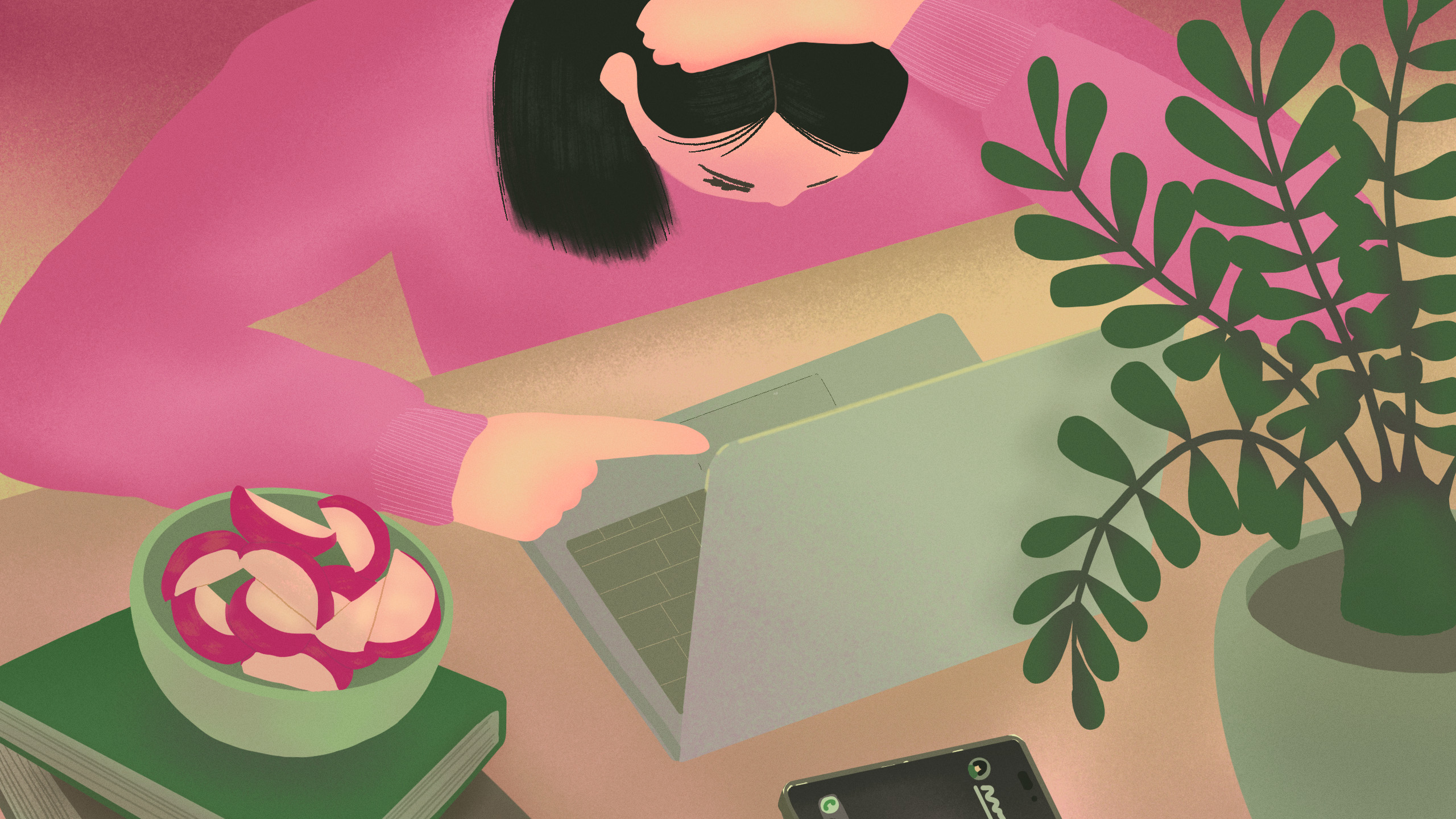
After dinner, my mom would place a bowl of sliced fruit next to me while I was deep in thought, struggling with homework in high school and endless papers in university. My dad would take me on weekly trips to the public library to satisfy my voracious love for reading. When I got older and moved out, my mom would offer money for birthdays, Lunar New Year and when she thought my frugality had gone a little overboard (I often shop in the clearance racks, which my mom thinks is unnecessary).
Maybe the lack of verbal affection worked for my parents, but it didn’t for me. I didn’t realize how emotionally stunted I had become until my 20s, when my inability to tell my closest friends I loved them made me feel like a heartless idiot.
I froze whenever someone said “I love you” to me. I felt awkward at the thought of returning the affection, and would let the moment pass. After the interaction, I would beat myself up for being too slow to come up with a response in time.
My mother-in-law loves ending video calls with “Love you, Eva!” Yet for close to six years, all I reciprocated with was “mmmhm!” A similar pattern emerged with my friends. I knew I loved my closest friends, but when they messaged “love you” to me, I always chose to use a heart emoji, or “luv u” or something close to “I love you” but not quite.
Writing out those three words felt too real and made me recoil. Even to my husband, expressing affection and becoming comfortable telling him I love him in passing took close to a year of dating. Expressing a feeling I never saw expressed in front of me felt impossible.
“What do you mean you can’t say ‘I love you’ to anyone? What is wrong with you?”
I didn’t know what was wrong with me. I had started making peace with my inability to express genuine affection in words for my friends and for my mother-in-law.
As a queer neurodivergent person of colour who cares a great deal about the world I exist in, I rarely found a crowd where all of those facets of myself were celebrated. The friends I made who became my bubble during the COVID-19 lockdown who were also neurodivergent couldn’t care less about my queerness and my anger at the New York Times for approving a full-page advertisement from the World Values Network targeting the Hadid sisters for supporting Palestine, and got upset at me for posting about mass graves found under residential schools. They called me a “social justice warrior bitch.”
Meanwhile, many of my Asian friends preferred the me who kept my mouth shut about being bisexual and neurodivergent. It always felt like I was too much: too loud, too queer, too opinionated, too socially aware, too honest.
I regularly wondered if I was broken. If all those years of putting in unreturned effort into friendships finally caught up with me. I had been cast aside, iced out and ghosted so often that it stopped being surprising. It still hurt, but I figured maybe I was the problem.
Then something magical happened.
About four and a half years ago, in early 2022, I moved from Vancouver to Toronto. That fall, I went to Emo Night at Sneaky Dee’s, a beloved dive bar and music venue, and met two people in the mosh pit who became my best friends. At Toronto Pride the following year, they introduced me to a wider group of friends who came to love me loudly.
@xtramagazine There were no trans characters in films released by major studios in 2025. That’s according to GLAAD’s Where We Are in Film study, which examined LGBTQ2S+ representation across 225 films released by 10 major studios in 2025. Not only did none of the tracked films include a single trans character but LGBTQ2S+ representation declined overall. Of the 225 films tracked, only 20.4 percent contained LGBTQ2S+ characters, a decrease from the 23.6 percent inclusive films counted in 2024. Representation has been trending down across the board. LGBTQ2S+ characters are not only in fewer films but they’re also getting less screen time and have less narrative significance. GLAAD president and CEO Sarah Kate Ellis warned that the overall decline in LGBTQ2S+ characters on screen will have long-term impacts. “If the industry doesn’t prioritize investing in films with LGBTQ2S+ characters, it risks losing a generation that will go elsewhere to find entertainment that does include our community.” We break down what you need to know from the annual report. #lgbtqnews #film #glaad #filmnews #lgbtq ♬ original sound – Xtra Magazine
Since meeting my current group of friends, I’ve stopped feeling like the odd one out. Being queer and neurodivergent no longer feel like burdens I have to mask in order to fit in socially. My community is filled with queer, non-binary and trans people, and for the first time in close to 20 years, I have friends who genuinely enjoy my loudness, my unabashed honesty and my deep care for the world around me.
Their doors are always open to me; they buy me incredibly thoughtful birthday presents; we go out for dinners and they listen to me vent about the woes of working in journalism. The same two friends I met at Emo Night almost four years ago walked as bridesmaids in my wedding three months ago.
About three years ago, I started challenging myself to say “I love you” to my friends and my mother-in-law. The first time the phrase entered my vernacular was during my goodbyes at the end of a hangout. I was fully ready for the radio silence that would follow, but to my surprise, my friends said it back in earnest without hesitating. I don’t feel proud of myself that often, but at that moment, I felt so proud to develop a habit my parents never taught me.
Today it no longer feels impossible to say “I love you” to my friends when I feel loved back equally every day. I’ve also grown accustomed to saying it back to my mother-in-law. I no longer freeze when she casually drops it at the end of a video call catching up about life. My partner’s parents live in Vernon, B.C., and we only see them a couple times a year. When I’m chatting with my friends from back home in Vancouver, I don’t rewrite “I love you” five different ways or use emojis, I tell them I love them properly, and I say “I love you!”
My parents and I still don’t say “I love you” to each other. Maybe we never will. Maybe our way of showing love will forever be through bowls of sliced apples and bank transfers. But I have hope for the future. A month ago, as we were saying our goodbyes outside the Vancouver airport, my husband said “I love you” to my mom, and she said it back.
Knowing I’m capable of saying “I love you” to other people brings me a sense of calm and relief. When I told my friends I was writing this essay on learning to say “I love you,” they were delighted and said they always knew I loved them, even if it took me nearly 30 years to say it out loud.

 Why you can trust Xtra