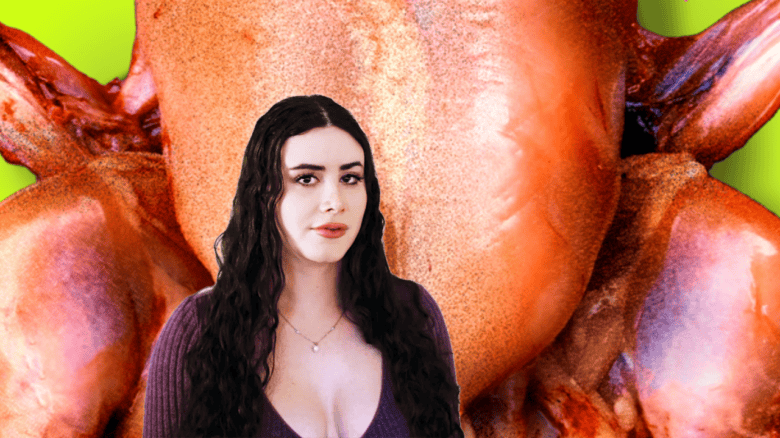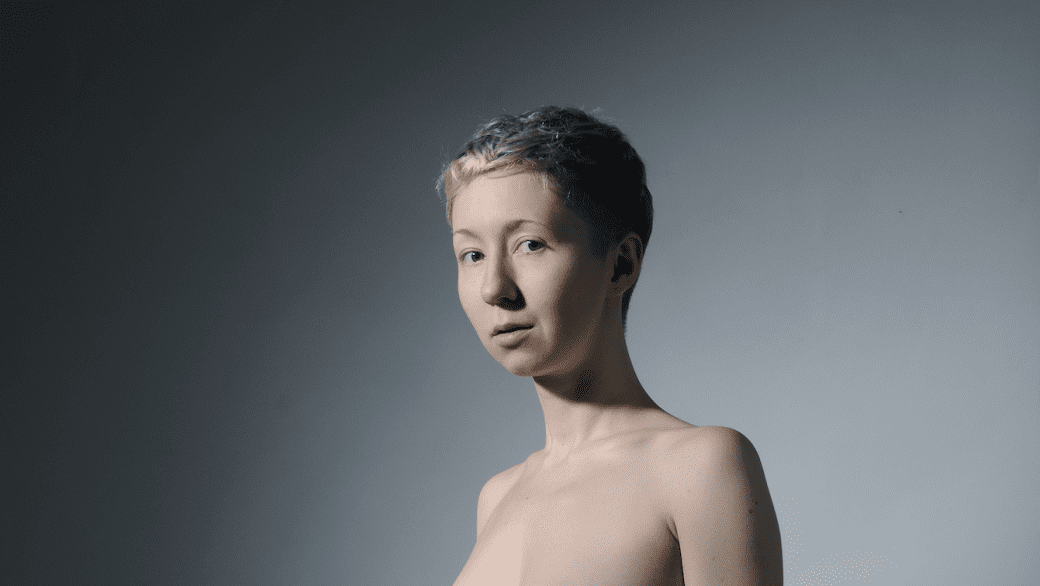
Perseverance is an essential quality for young artists; something Katie Sly has in spades. The erotic writer, performer and bisexuality activist first applied to the Young Creators Unit in 2012. Overflowing with enthusiasm and ideas she was sure it was the place where she could take her craft to the next level. But success wasn’t in the cards that year and she was rejected. Undaunted, she took another stab the following year and snagged a spot.
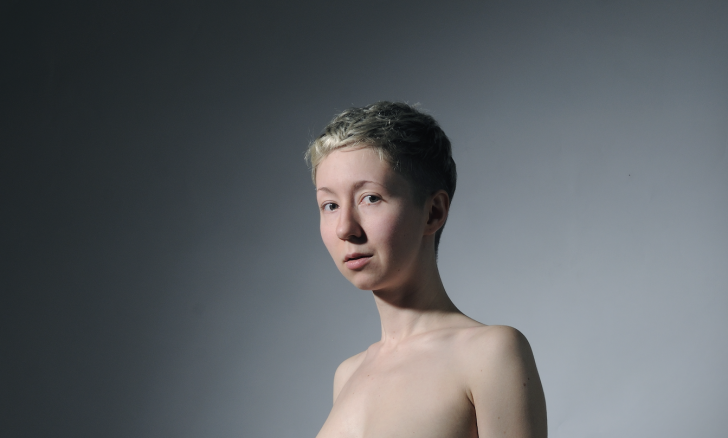
Daily Xtra: Tell me about your process of getting into the program.
Katie Sly: The first time I applied I sent my application from deep in the closet. I’ve known I was bisexual since I was 12 and was out in high school. But then got into a long-term, monogamous relationship with a cis man, during which my then-partner often asked me if I was “still bisexual” and told me that my bisexuality caused him insecurity, because he worried I’d leave him for every person I met. At the time, I didn’t have a queer community around me, I didn’t recognize that biphobia for what it was, and I blamed myself for being the thing wrong in our relationship, so I just stopped being honest.
Around that time I was discovering I wanted to be a playwright, and when I saw the call for the unit I applied. I had no performance experience whatsoever but every fibre of my being needed to stop lying about who I was. Just that act of applying helped me leave the toxic relationship I’d been in for way too long. In a real way, the fact that Buddies in Bad Times Theatre exists gave me licence to exist as myself.
I know you didn’t get in the first time. What did you do after that and why did you decide to apply again?
I wasn’t ready for the unit. And Evalyn Parry (who was running it at the time) saw that and was honest about it. But she didn’t toss me away. She made me feel like I was a person whose story mattered. I enrolled in some performance classes at George Brown and I did PrideCab (Buddies other long-running youth program), where I made queer friends for the first time in my life. And the next year, I reapplied out of sheer determination. Or stubbornness? But also, because I wanted to make a show about bisexuality and my struggles to be a person the world largely says didn’t exist. In an attempt to create something that helped me and people like me feel substantial, and as a contract, with myself and the world, that I would never lie about my nature again.
Buddies was clearly important in your development as an artist. Was it also important in your development as a queer person and sexual being?
Absolutely. While people always say LGBT, bisexual people like myself often feel like we’re not welcome in queer spaces, or that we can be present in queer spaces as long as we never show up with a partner of a gender different than our own. This view of what’s “really queer” and frankly a very static view of gender, hurts so many of us and makes us feel like we shouldn’t be who we are. Having Buddies welcome me make work there, not only as a bisexual person but as a person developing work about bisexuality, made me feel like a valuable part of the queer community. Now I run an arts-based activist group called Too Queer, which showcases work addressing bisexuality and pansexuality. The support and conversations I had within the walls of Buddies gave me the logistical know-how and emotional fortitude to create space for others the way space was created for me.
If you’d never done the ECU, do you think you would still have found a way to your current artistic path? Or would you have given it up entirely?
I definitely wouldn’t have given up playwriting. But I would lack some of the confidence I have to pursue performance. To have one of your first experiences as a performer be a solo, 30-minute show is a bit of a trial-by-fire. But I’m a more confident person for it. Not confident in the sense that I always know I’ll succeed, but confident in the sense that I’m not afraid to fail. Being part of the program gave me a real sense that it’s better to fail at doing something raw and honest than to succeed at doing something you don’t care about.
Read about another Young Creators Unit alumnus Tawiah M’carthy >>
 Why you can trust Xtra