Gay women are starved for good TV shows. So what lesbian wouldn’t jump at the opportunity to watch a show about lesbians in the American south, especially when it doesn’t require a commitment to cable TV or a wide bandwidth for streaming downloaded videos?
Watching Girl/Girl Scene is as simple as logging on to the website and pressing play.
That’s what I did — with the intention of quickly satisfying my curiosity so that I could, without feeling bad, press the delete key on a promo email urging me to watch the show.
That never happened.
I watched all the current episodes — there are seven — back to back, then promptly set up an interview with the show’s creator, writer and star, Tucky Williams.
Since Williams lives in Lexington, Kentucky, a state not known for its good record on civil or gay rights, I was curious why she set her show there.
“I wanted to see a show that was more like what my life was like: being young and having fun and actually really enjoying being a lesbian and not being tortured about it,” she says. “I felt like all the stuff I was seeing was very romanticized and in that sense, boring. For me it was more fun to be dating and meeting different girls.”
Williams stumbled unplanned into screenwriting while she was acting in B-rated horror movies. After a bad experience on set, she took the advice of Eric Butts, a friend and now editor of Girl/Girl Scene, and wrote a TV pilot.
Then Butts convinced her to film it.
Williams perused websites and Facebook pages looking for local actors.
Seven eventually came on board, and filming began without a regular schedule because all the actors have other jobs.
“We wing it,” Williams says.
This meant shooting with hand-held cameras until the program gained popularity and equipment was upgraded.
“Episode 6 is beautiful, and that is exactly where we want it to be: beautiful picture, beautiful lighting, perfect sound. I am very happy. I finally feel that this is the show that I can show to people,” Williams says.
She drummed up hype by writing to lesbian websites and asking them to post links to the show. The tactic worked.
“I am really surprised that it was as successful as it was. I was doing it more as a passion,” she says. “I thought we would put it on YouTube and maybe 5,000 people would watch it, and then overnight, after the first episode, everything changed. Not just for me but for everybody. It was a big wonderful surprise.”
Williams is loath to discuss how many viewers are watching her show, comparing the question to asking people how much they weigh.
One thing she does admit is that Girl/Girl Scene is now making some money — which, she says, is more than 99 percent of artists running web-based programs can say.
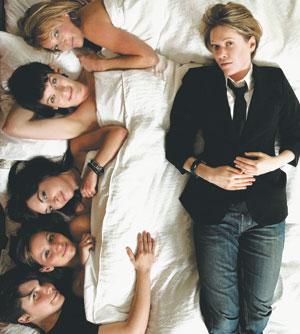
Girl/Girl Scene follows the life of Evan, played by Williams, and her close group of friends, foes and strangers. The show is fun and easy to watch, and it deals with issues pertinent to the queer community, including safe sex, coming out and trans issues.
“I don’t want to say that there is one message because there are many messages . . . It is fun to be gay or lesbian. Fun. It should be fun. If you’re not having fun, then you are not doing it the right way,” she says.
Williams is currently wrapping Episode 8 of the first season and looking forward to Season 2.
“I want to keep on going for as long as I can with the show,” she says. “I love it so much, knowing how it’s affected people and all the people who love it. All I really want to do is keep making it and keep making it better.”
 Why you can trust Xtra