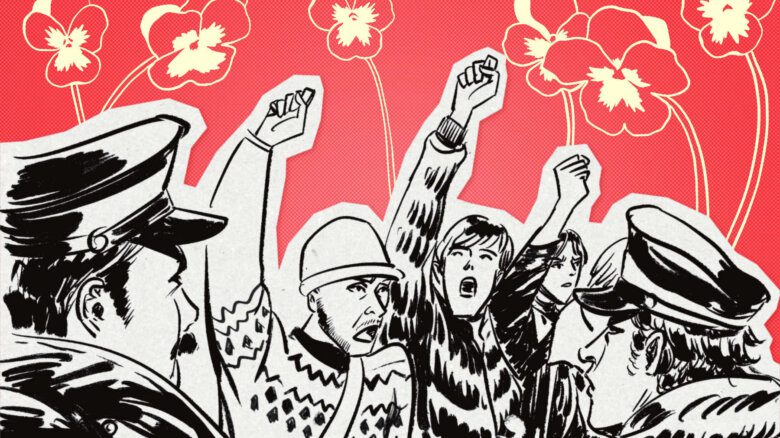
you might say the more things change the more they stay the same. Or maybe, everything old is new again. Or how about: the Sixties are the new Eighties?
With the opening of three exhibitions in Ottawa focussing on art and design in the Sixties in the past month -The Sixties In Canada at the National Gallery Of Canada, The Sixties: Photography In Question at the Canadian Museum Of Contemporary Photography and Cool ’60s Design at the Museum Of Civilization – you might want to renew your gym membership and get yourself ready for the summer of love that must surely be on its way.
We have never really stopped living with the Sixties – its music, its fashion and its political and cultural icons. And rightly so; not since early in the century had there been such an explosion of ideas, creativity and experimentation. Artists and activists exercised their freedom of expression. Art influenced politics and politics influenced art – and both pushed the boundaries of what was acceptable. There was a desire to change the very fabric of society; the civil rights, anti-war and student movements challenged the existing political and power structures and demanded change.
The movements of the Sixties paved the way for the environmental, women’s and gay rights movements of the Seventies and the identity politics of the Eighties. Everything is built on the foundations of what came before.
There is something uncomfortably familiar about Sixties In Canada at the National Gallery. Not because some of the pieces have been on display in the gallery before or because of the big names – General Idea, Michael Snow, Joyce Wieland to name a few – but because the work exhibited and the issues raised are as relevant today as they were when the work was created 40 or more years ago. War, racism, Canadian and Quebec nationalism, US cultural imperialism.
You might well ask yourself: Are things getting better or are things getting worse?
For those who think things are getting better, we need only to consider the current political climate, rightwing and right-leaning regimes in the United States and Canada respectively. We are in the middle of a war but this war is not being completely televised, we do not see the flag-draped coffins of dead soldiers returning home. Multinational corporations rule the roost. The planet is a mess. We see our social programs and personal freedoms eroded. The obsession with same-sex marriage diverts precious energy and resources from issues like HIV/AIDS, queer youth, homophobic violence and regressive legislation that will undoubtedly be used against our community. Hardly the stuff of progress.
But hey, it ain’t all heavy, it’s the Sixties. So throw on a poncho, load some Jefferson Airplane and Jimi Hendrix on your iPod and gear up for a happening.
THE SIXTIES IN CANADA.
National Gallery Of Canada.
Until Apr 24.
www.national.gallery.ca
THE SIXTIES: PHOTOGRAPHY IN QUESTION.
Canadian Museum Of Contemporary Photography.
Until Apr 24.
www.cmcp.gallery.ca
COOL ’60s DESIGN.
Museum Of Civilization.
Until Nov 27.
www.civilization.ca
 Why you can trust Xtra