A key ingredient behind the iconic teen drama Gossip Girl is the glossy relationship drama. Beyond the backstabbing, the boho-versus-preppy fashion and the indie-sleaze soundtrack of its time, these rich kids yearned for love. With every supercouple came an obstacle in the form of a recurring guest star who caught the heart of a lead character for tension in the show’s main romantic pairing.
One of these obstacles was Tika Sumpter’s character Raina Thorpe. Despite wooing both Chuck Bass and Nate Archibald, Raina’s relationships with the two eventually ended. Chuck resumed his on-and-off romance with Blair Waldorf, while Nate pursued several new relationships afterward. Raina was a footnote in Chuck’s and Nate’s romantic sagas and was never mentioned again after her exit. There’s a notable difference, however, with Raina compared to previous romantic interests on Gossip Girl. She was Black.
In 2019, British Nigerian author and journalist Yomi Adegoke wrote an essay about a television trope concerning Black women. The “Disposable Black Girlfriend” is a leading man’s romantic interest for one to several episodes. She’s beautiful, emotionally intelligent and compatible with her partner. But when the Disposable Black Girlfriend’s arc ends, these traits get discarded. The relationship ends and the man pursues a new partner or rekindles a romance with his “one true love.”
This trope is most present in white-led series, resulting in the true love often being another white character. The Disposable Black Girlfriend becomes an attempted remedy on critiques about racial diversity in white shows. What writers don’t realize is that they’re reinforcing tokenism. The Disposable Black Girlfriend not only fails to pose a legitimate threat to the central white romances but her racial identity is rarely acknowledged in the story while navigating white spaces and an interracial relationship.
Unfortunately, this trope isn’t limited to Black female characters. In Sex and the City, Blair Underwood played Miranda Hobbes’s boyfriend Dr. Robert Leeds. While Robert was sexy, non-judgmental and successful, Miranda cheated on him with her ex-boyfriend Steve Brady. Their relationship ended offscreen and the writers vilified Robert by reducing him to the “Angry Black Man” stereotype. Kind-hearted Robert was now passive-aggressive and misogynistic toward Miranda, even mocking their sex life. Before his character left, Miranda accused Robert of destroying Steve’s belongings in a jealous rage. She went as far as describing Robert as “angry” and “crazy.”
The problem with the Disposable Black Lover is that it perpetuates a racial hierarchy. These Black characters are “perfect matches” for the beloved white leads, but they’re unworthy of romantic endgames. The Disposable Black Lover is a plot device advancing the happiness of non-Black partners. This places Black desirability as inferior, which is a damaging narrative within mainstream media. It’s not enough for Black characters to “exist” in these series if writers lack the care and respect to invest in their romantic journeys.
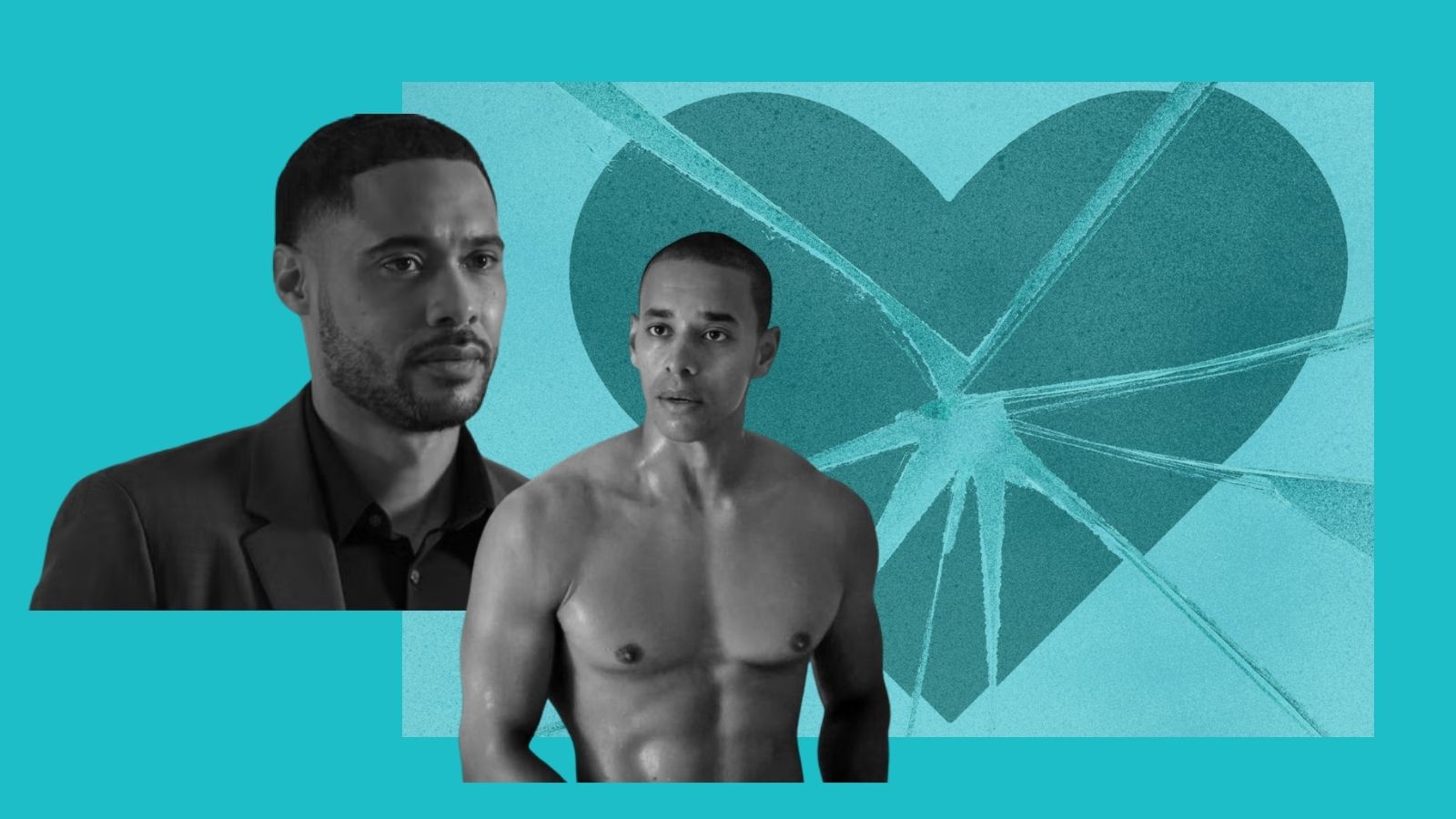
I’ve noticed the trope popping up in series about queer men. In Boots, which aired on Netflix in late 2025, Isaiah Nash (played by Dominic Goodman), a Black character, is initially the romantic interest for closeted white lead Cameron Cope (Miles Heizer). Both exchange longing glares, Cope fantasizes about Nash and the boys exchange flirtatious banter. This changes when Nash’s homophobia fractures their dynamic. While Nash apologizes, his screen time with Cope diminishes. This rift, however, introduces a new white character Joshua Jones (Jack Cameron Kay) to be a foil and potential suitor for Cope.
I was disappointed as this abrupt end to Nash and Cope’s relationship prevented the writers from exploring Nash’s sexuality. For the remainder of the season, Nash’s potential queerness wasn’t mentioned. Boots is set in 1990, and its writers missed an opportunity to highlight the challenges of self-acceptance as a Black man in the military at that time. This could have contrasted nicely with Cope’s own queer journey, adding narrative depth to the relationship between the two. Instead, Nash’s sexuality was tossed aside.
A similar storyline occurred during the first season of FX’s English Teacher. Brian Jordan Alvarez plays the title character Evan Marquez, an out millennial working at a public high school. Evan is attracted to his new Black colleague Harry (Langston Kerman). Evan initially hides his feelings to avoid fraternizing with staff. He also discovers that Harry has a boyfriend, only to learn that Harry’s in an open relationship. When the “will-they-won’t-they?” dynamic crystalizes in the finale, Evan reconciles with his white ex-boyfriend Malcolm (Jordan Firstman) rather than pursuing Harry. This was frustrating given the buildup between Evan and Harry. Why invest in that story if the goal wasn’t for their relationship to materialize?
Boots and English Teacher depict these romantic pairings from Cope’s and Evan’s point of view, omitting the perspectives of their Black love interests. It creates a narrative gap, forcing viewers to assume how Nash and Harry feel since their perspective isn’t conveyed onscreen.
The Disposable Black Boyfriend isn’t new to queer television. In Looking, O-T Fagbenle’s character Frank breaks up with Latin partner Agustín (Frankie J. Alvarez) after the latter hires a sex worker to sleep with Frank. This storyline remains uncomfortable because of the sexual fetishization of a Black body and the focus on Agustín’s perspective after the breakup. Degrassi: The Next Generation’s signature gay character Marco Del Rossi (Adamo Ruggiero) cheats on his Black boyfriend Eric (Dwain Murphy) with former beard/best friend Ellie Nash (Stacey Farber). With Marco’s self-acceptance journey spanning several seasons, it felt insincere to have his character pursue a woman after he dates a racialized queer character. Taye Diggs’s character James Hanson in Will & Grace has a green-card marriage with Grace Adler (Debra Messing) to be with Will Truman (Eric McCormack). The marriage, however, is annulled after one episode when James is “exposed” as a manipulative liar.
Could these examples be coincidences? Maybe. But when these patterns occur with Black queer characters, it calls into question whether we’re deserving of love onscreen when we’re often denied those opportunities long-term. GLAAD’s 2025 Where We Are on TV study noted that only 17 percent of LGBTQ2S+ characters in 2025 were Black, while white characters accounted for 41 percent. Our representation in television remains small. This limits the opportunities to normalize Black queer and trans stories onscreen beyond a white perspective. When writers pair us with non-Black folks, I believe it’s their responsibility to assure that these characters are fully realized. Give Black queer and trans characters interiority, so audiences grasp their motivations inside and outside their relationship. Make us active in the romantic story rather than a passive means to an end for the non-Black partner.
A character defying the Disposable Black Lover trope is Darren Rivers (played by James Majoos) from Heartbreak High, who is non-binary. In season one, Darren’s white love interest Douglas “Ca$h” Piggott (Will McDonald) reveals he’s asexual. This challenges the couple to redefine what intimacy means beyond sex, while allowing both characters to advocate for their emotional needs. I admire Heartbreak High for exploring the conflict through both Darren’s and Ca$h’s points of view. Darren discusses their romantic concerns with loved ones onscreen. Viewers can see Darren share and even withhold their feelings from Ca$h. Darren’s presence isn’t dependent upon the boy they’re seeing. Their romantic relationship is an extension of the character, not a defining trait.
In late 2025, Boots and English Teacher were cancelled. The news is disheartening as it adds to the list of queer content disappearing, while preventing writers from making improvements to the Black queer characters that exist in both series. I’m eager for queer and trans television to have longevity, but I also believe it’s imperative for creatives to make informed choices that dignify queer and trans characters of all races. Hire Black queer and trans folks in writers’ rooms to legitimize our lived experiences onscreen. Depict loving romances among Black queer and trans folks to dispel the myths that it isn’t possible. We may only get one chance to truly shine in this medium, so I ask non-Black writers one question: If you wouldn’t settle for being the disposable lover in fiction or real life, what makes you think that Black queer and trans folks would settle either?

 Why you can trust Xtra