If history is written by the winners, what are we to make of the newest bit of monument-making?
The provincial government announced Jan 7 that it was renaming the Ministry Of The Attorney General building at 720 Bay St. Henceforth the structure sometimes known as the Pink Palace would be called the McMurtry-Scott Building in honour of two former attorneys general, Roy McMurtry and Ian Scott.
“These two men epitomize the best in the tradition of public service,” said current attorney general, Michael Bryant, conveniently ignoring the two gentlemen’s somewhat tortured relationship with the gay and lesbian community.
It’s hard now to remember McMurtry’s former image as chief villain to the local gay community. As one of three justices who effectively legalized gay marriage in Ontario in June 2003, he is now widely lionized. The Globe And Mail named him and his fellow judges Nation Builders Of The Year for 2003. But 20-odd years ago McMurtry was one of the most widely reviled figures in the local community. Right up there with – and far more influential than – the citrus queen herself, Anita Bryant.
As attorney general from 1975 to 1985, McMurtry presided over one of the most tumultuous periods in Toronto gay history, a period in which the state seemed hell-bent on destroying key gay institutions.
First it was The Body Politic, published by Pink Triangle Press (which now publishes Xtra). Police raided the paper’s offices in December 1977 and charged the press and its officers mailing obscene material the following month. The press was acquitted, but the Crown appealed and forced the press into a second trial. The press won a second time and the crown again appealed. It wasn’t until October 1983, almost six years after the persecution began, that the press was home free.
As attorney general, McMurtry could have stopped the appeals process. He didn’t and whether by accident or design the effect was to drain the already limited resources of a largely volunteer-based organization.
The abuse of state power was so flagrant that even the conservative Globe And Mail wondered what was going on. “Does the attorney general’s office intend to go on prosecuting until it finds a court that will convict?” wrote the Globe’s editorial writers in July 1982, shortly after the Crown announced it would appeal the outcome of the second trial. “Does it think that is justice?”
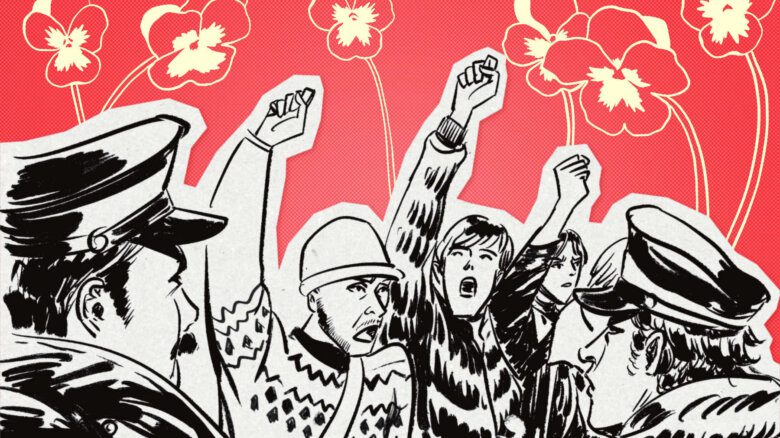
Then there were the bath raids. The most infamous, conducted on the night of Feb 5, 1981, was so large and so extensive – more than 300 men arrested, more than 150 cops, four bathhouses hit on a single night – that many people suspected approval from on high.
McMurtry was never connected directly with the raids but if he and his fellow Tories did not actively plan or promote the raids, they certainly created the climate that favoured them. McMurtry adamantly refused to amend the human rights act to protect gay men and lesbians, telling protestors, “It will never happen while I’m in office.”
Twenty-two years later, in the same Globe And Mail article that lauded him for his activist stance on gay rights, McMurtry called the raids an “unhappy incident for everyone,” but said politicians had to stay clear of criminal investigations.
McMurtry’s successor in the AG’s office, Ian Scott, did a little better by gay and lesbian people. A closeted gay man who didn’t come out until long after he’d left the cabinet in 1990, Scott presided over changes to the provincial human rights code that prohibited discrimination based on sexual orientation. The amendment was not his idea. Credit for that goes to NDP MLA Evelyn Gigantes, who moved the amendment in committee. But Scott did support the change afterward.
On the other hand, he opposed pension benefits for same-sex couples and in his autobiography, written years later, Scott said that he thought that “gay couples who wanted to get married were misguided.” They were buying in to the values of a society that oppressed them.
The irony, of course, is that in the long run it was the straight guy who did more for gay and lesbian people when it came strictly to rights. As one of the chief architects of the Canadian Charter Of Rights and Freedoms, McMurtry set the stage for the biggest advances of the last two decades. Without the equality provisions of the charter we wouldn’t have many of the rights we have today.
 Why you can trust Xtra