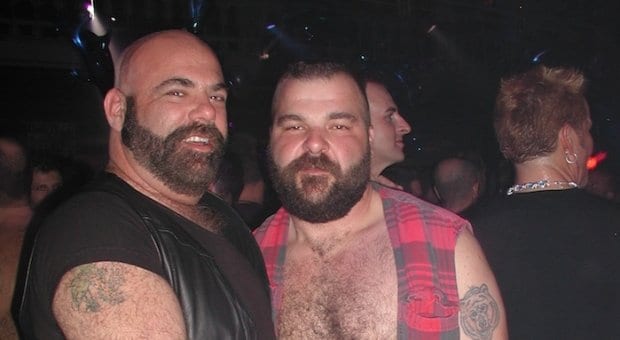
The Mister Ottawa Bear (MOB) competition is back in 2014 or, as the organizers put it, it is coming Out of Hibernation.
That’s the theme chosen for the event, which returns this year following a three-year hiatus.
MOB is just one of a three-part celebration beginning Jan 24 with a meet-and-greet and karaoke party at Swizzles (246 Queen St). The competition itself follows on Jan 25 at Prinzo Fine Catering (85 O’Connor St). It all wraps up Jan 26 with the Survivors’ Brunch.
After successful events in 2009 and 2010, Ottawa Bears president Steve Royer explains, organizers cancelled the 2011 edition when just one contestant signed up. That, he says, sent “a ripple through the group. That was the whole point of our theme because we’re rebuilding.” Rebuilding not only MOB, but also the Ottawa Bears organization itself, which invites members to monthly get-togethers over coffee or brunch (food “is a big thing” for the group, Royer adds). Although recent attendance has been an improvement, Royer says it’s down overall from the pre-2011 period.
“All groups go through fluctuations,” he says, and many simply wanted a break following the disappointment of MOB 2011. “But there’s a need for us. When we have 18 guys out, it’s not always the same 18. We’re on the rebound. We’re getting more, younger men coming out.”
As for MOB, Royer says that beyond the big fun, the event is also about making real, positive change. So, while contestants will be evaluated for their fashion sense in the Bear Wear competition, “bear attitude” will also be a factor.
“We have questions, serious and non-serious, that we pose to them, such as ‘What is a bear to you?’ and ‘Why are you here?’ ‘How would you be a good ambassador for the group?’”
Royer says organizers are also serious about breaking stereotypes that exist within the wider gay community, such as the idea that bearness begins and ends with a husky build.
“Bears come in all shapes and sizes. It’s more about the pursuit of hair, manliness. What is a man, you know? This is what we like as a community. It’s just [about] who we are and [being] comfortable in our skin this way. We’re all on the same side in a way, but we represent two different aspects of that.”
Bears are sometimes misunderstood by other gays, Royer points out, but the straight community frequently doesn’t even realize they exist.
“My car has the bear flag, not the rainbow flag. It took my neighbour five years to ask me, ‘What does that mean?’ Everyone knows what the rainbow flag is, but they have no idea what the bear flag is. I think it’s partly being able to stand up and say, ‘No. We’re gay too.’ And that’s shocking to a lot of straight people because they don’t understand. I think we’re helping to break down stereotypes and actually, in a way, helping to make us all more inclusive in society as a whole.”
For more information, visit oursottawabears.ca.
 Why you can trust Xtra