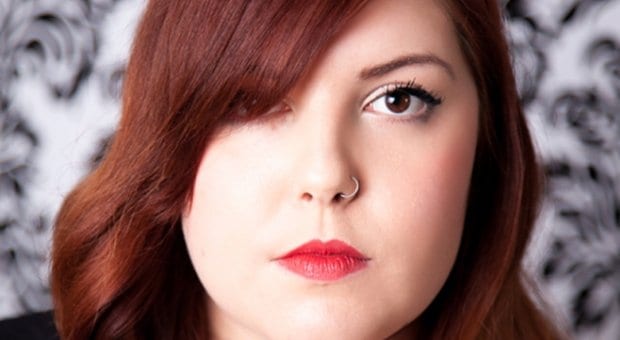
The haunting voice of singer/songwriter/poet/spoken-word artist Mary Lambert on the pro-gay-marriage song “Same Love,” by Macklemore and Ryan Lewis, is filled with restraint and understated elegance. The lesbian singer has turned the chorus of that tune into her full-length song, entitled “She Keeps Me Warm.” Lambert has now become a quiet storm on the music scene and is taking centre stage.
Xtra: Your music and voice bring me to tears, especially on your new song “She Keeps Me Warm.”
Mary Lambert: You’re going to make me cry! Thank you.
You are a self-confessed crier.
I cry most of the time because I am so happy and overwhelmed with the beauty of life and of humanity and how supportive people are. I think I’m just really empathetic, so when I see someone in pain or when someone is overwhelmed with happiness, too, I am so there with them and I’m feeling everything they’re feeling.
Did you write the chorus for “Same Love” before turning it into “She Keeps Me Warm?”
I wrote the chorus specifically for “Same Love,” and that was where everything started. There’s something I wanted to say that wasn’t political, and I just wanted to write a love song that happened to be about a woman. It’s not for the purpose of writing a lesbian love song.
How did you come to work with the Macklemore and Ryan Lewis?
We have a mutual friend, Hollis Wong-Wear, and she is the singer and songwriter for their song “White Walls,” and we did spoken-word poetry together. I got a call from her in the morning, and I wrote the hook for “Same Love” in about two hours, went to the studio that day and recorded it that night, and the rest is history.
“She Keeps Me Warm” is like the next phase after “Same Love,” where the couple got married and now they are living comfortably in their relationship.
That’s what I think it is, too. It’s sort of post-politics at the base of it all and something that we need to remind ourselves that connects us to each other is this universal love.
Tell me about your process of coming out.
When I met my first girlfriend I was 17 and everything made sense, and I was like, “Holy cow! Why isn’t everybody a lesbian? They should be because it’s awesome and I’m totally in love with this girl!”
Your songs are not political, but do you think that you’ve changed people’s views about gays and lesbians?
That’s a big statement, and it’s hard for me to swallow that and say that I’ve changed someone’s opinion about a group of people. I got an email from a 60-year-old white woman in the South, which is the demographic of someone who would be homophobic in general. She said that after listening to “Same Love,” her opinions changed. It’s one step and it’s not the solution to everything, but I feel that it’s a little victory.
 Why you can trust Xtra