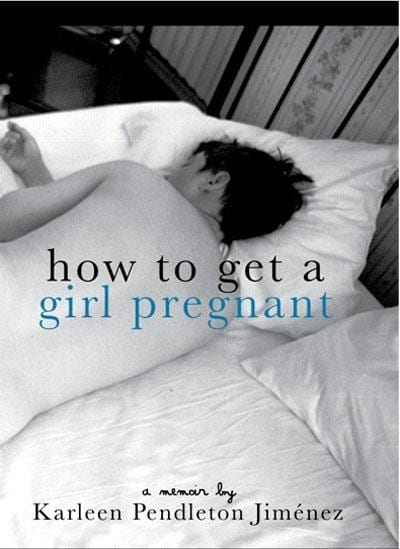
Long gone are the days when butch writer and professor Karleen Pendleton Jiménez slept with a copy of Leslie Feinberg’s Stone Butch Blues under her pillow. She’s found her own sense of catharsis writing a memoir about the trials and tribulations of getting knocked up.
In How To Get A Girl Pregnant Jiménez muses about the sterile coldness of fertility clinics, having sex with men, her period of deep desperation, and the extreme measures she took to have a baby. Sheexplores the lengths to which some people must go.
“I wrote 90 percent of the book in a year and a half,” she says, over a bowl of soup at The Gladstone Hotel cafe. “The reason I say 90 percent is I had four chapters written at the time. I did some journaling when I was in the fertility clinics.”
Jimenez wrote the book as she went – in the fertility clinics and beyond – still working on it in between feedings after her daughter was born.
“You don’t have hands when you have a baby,” she says.
Jiménez would pick up a pen and paper after her daughter fell asleep, trying to reach her goal of 300 words per day. Upon reflection, Jiménez was surprised by her own sense of estrangement. Writing herself, her story, granted perspective on an incredibly difficult period.
“I found the process really isolating,” she says. “I want people not to be alone in the middle of that process. It’s very lonely. I think writing can be there with you. It speaks to us, assures us we are not alone. In How To Get a Girl Pregnant there are 100 tips for how to get pregnant.”
As professor of education at Peterborough’s Trent University by day, mother, partner and writer by night, it’s hard not to wonder if publishing a tell-all memoir rouses some anxiety in the life of an academic. When asked about her concerns, Jiménez pauses, taking a sip of her tea. Swallowing slowly.
“It’s a good book when it comes down to it,” she says. “Being a professor is a bit of a macho job. You’ve got to be tough, know how to take criticism. You’ve got to fight for your ideas, prove you are worthy. To write a book is to go against the job.”
 Why you can trust Xtra