The task of unearthing the reality of gay men and lesbians in Jamaica is a phenomenon hard to imagine when they are fighting for their lives, let alone basic human rights. The fact that the issue is even discussed publicly in Jamaica via such national newspapers as the Jamaica Gleaner and the Nation is a celebration of the revolutionary work done by the members of JFLAG (Jamaica Forum Of Lesbians, All-Sexuals And Gays).
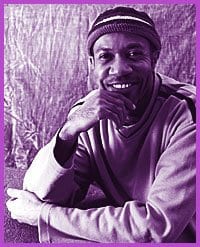
Phillip Pike’s documentary, Songs Of Freedom, is an extension of this revolution. The video tells the stories of Jamaican gay men and lesbians going about their daily lives. Pike introduces us to these queer folks through the poetry of a gay African American spoken word artist, Vincent Woodard. His poem, Walking In The Spirit Of My True Self, serves as the framework through which these stories – brutal, sad and humorous – are woven.
Panning the mountains and terrain, the beaches and rivers, the ghetto and the city, Pike’s creative camera work sets the context for Jamaican queer tales. With a haunting and tantalizing music score by Toronto’s Quammie, Caribbean gay men and lesbians at once feel at home as Vincent’s poetry of home, belonging and ancestry permeates the film’s opening sequence.
Sadly, the poetry, the flora and the fauna richly established in the opening sequences do not weave through the rest of the documentary.
Pike’s video tips heavily towards talking heads, the stories of individual gay men and lesbians. This is deliberate. According to Pike, far too many times the rest of the world’s stories are told while we never get to hear our own.
In this film however, most of the griots (storytellers) chose to obscure their faces and use fictitious names. Didn’t JFLAG clear the way for their comfort zone? I don’t think so. But the result leaves you feeling cheated. Only two speakers show their faces, “Larry” and “Bobby.”
Yet Songs Of Freedom sure has a lot to celebrate. Perhaps for the first time, we here in North America come face to face with the brutality and horror to which Jamaican gay men and lesbians sometimes experience. Pike’s film also gives us an overview of retro queer lifestyles. As early as 1977 Jamaica had its first gay and lesbian movement led by one of the film’s visual informants, Larry. This movement published their first journal, the Gaily News, and by 1981, Larry served as its editor. Larry says that the Gaily News had a reach that extended from the rural country districts of Jamaica to as far as Finland. One may have never known this if this film was not made.
At the end of its 75 minutes there is no catharsis, but rather one leaves the cinema informed, proud to be a Caribbean gay, lesbian or all-sexual. So where it falls short in structure and style, Songs Of Freedom certainly makes up for with, what’s called in the Caribbean, “edutainment.”
* Songs Of Freedom is produced by Jahloveboyproductions. Look for it in film festivals coming up during the year or you can purchase a home video at www.jahloveboyproductions.com.
 Why you can trust Xtra