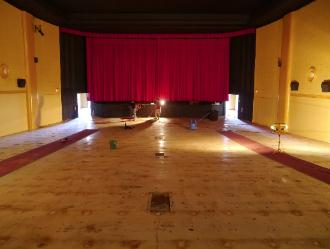
The ByTowne Cinema is getting a makeover. The theatre has been a mainstay in Ottawa’s independent film community since 1988, and the accumulated wear and tear of 25 years of bums in seats has necessitated major renovations.
The most dramatic change will be the replacement of 435 auditorium seats. “We’ve been through sort of a two-year process of updating,” says ByTowne owner Bruce White. “The seats are the most dramatic and visible. Certainly, this is where the customer comes in contact with the cinema right at their gluteus maximus for a couple of hours when they’re here, so that’s the most apparent change and it’s also one that’s technically fairly complicated and required us to close for a little while.”
The theatre, which frequently shows gay-themed films, has also made the switch from film to digital projection to keep up with industry changes. The auditorium was repainted earlier in the spring and the velvet curtain was cleaned and repaired.
“It’s still a point of pride for us that we’re one of the last cinemas in the city – I think the last cinema in the city – where you can enjoy that red-velvet-curtain opening and closing at the beginning and end,” White says. Last week saw the removal of all the theatre seats. That has allowed access to the floor, which will be repainted and given fresh carpet. Then the seats will be replaced and the theatre will reopen May 17.
White is pleased with the speed of the process. “I love going to the movies, and I don’t want the ByTowne to be closed any longer than it has to be, so we wanted to keep the time as short as possible. Basically, we’re losing one weekend and the days surrounding that weekend.”
The entire process has been fairly costly – the move to digital projection was around $90,000 and the renovations, including the seats and carpeting, added another $100,000 to the bill. “The overall cost of upgrades is something that should be thought of as a one-time expense,” White says. “Seats, for example, have got a 15- to 20-year lifespan.”
The theatre has also been selling off its old seats. “There are some people who are nostalgic for these sorts of things, or who are trying to equip a home theatre, and it’s not easy to buy cinema seats yourself.” Buyer beware, however: “The seats need to be bolted to the floor, so you can’t just rearrange them in your living room whenever you feel like it,” White says.
The new seats will be more ergonomic and will feature retractable armrests to facilitate snuggling with the person seated next to you. “This is only, of course, allowed at the ByTowne if you know the person sitting next to you. You must ask permission,” White says.

 Why you can trust Xtra