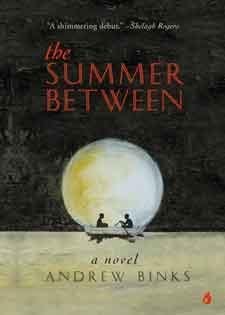
Andrew Binks has a firm grasp on the pleasures and confusions of boyhood. In this softly luminous first novel, he evokes the discovering of the world as only a 12-year-old can know it, in those fleeting moments before the hormone-charged teen years bring on the first waves of adult anxiety and disillusionment.
At tale’s start, young Dougaldo (“Doug” by preference) still has the unencumbered mental space to view the world with a sense of wonder. Mid-winter in school, he tunes out the carping voice of his “bag” of a teacher and drifts again to thoughts of his summertime best pal: Tom, a half-Aboriginal boy with whom he can cavort only two months of the year, swimming and fishing in the broad, slow-moving river by his home. That means a long cold season of winter longing, and daydreaming at school. Binks grounds the boyish passion with a dovetailing of nature and Doug’s regard for his own pubescent body: Bored out of his tree in a classroom he thinks: “The skin on my arms. They’re the same arms that’ll be swimming in the river when summer’s here. The same skin that was there last year.”
Then we’re reminded that the world has harder things to endure. Just 10 pages in, Binks counters the nostalgic idyll of summer with a search for a missing boy in bone-chilling snowy woods. The lad, a friendless playground misfit, is found hanging from a tree. He’d brought a rope to school that morning. Doug and others had taunted him that day at recess. His callow love for one boy comes hard up against flaring guilt for the death of another.
Binks’s synthesis of vivid rural setting, seductive characters and subtly emerging theme drives the story forward.
At heart (and there’s a wealth of heart here) this is a tale of emerging identity. But while on one level a coming-of-age story, it’s also a meditation on the divisive concept of otherness and the perils of two worlds spilling over into each other. Doug’s mother, an embittered woman who suspects her hubby of cheating and is fed up with her maternal duties, channels part of her indignation into clichéd racism, warning her kids to stay away from the “heathens” in the “Injun” settlements along the river road. This is the 1960s, and even Tom casually refers to his mother’s family as “Injuns” — though he denies that he’s one himself.
Doug is utterly smitten with Tom — more so than he’s willing to admit to himself, let alone to Tom or anyone else. As summer arrives and they reconnect, he’s mesmerized by the new tufts of black hair peeking from Tom’s armpits. Bronzed by what seems a perpetual tan and wrapped in an aura of strong, amiable silence, Tom is the perfect model for a young kid’s mythic ideas of the noble savage. Binks uses these stereotypes with sensitivity and gentle irony to show Doug’s naiveté, but also the touching purity of his desire to be near (and be like) his native hero.
On a hot and lazy afternoon of fishing on the river, Doug and Tom spend hours simply being with each other. The long stretches of silence, as they drift slowly on the glassy water, seem to heighten their connection. Then Tom unexpectedly puts skin to skin: “He looks at me, stretches his leg and presses his foot on top of mine. My heart whacks under my shirt and everything in my body whacks too, even my brain. I keep looking at him. He must know.” When Tom pulls his foot away, “All is still. The whole world is still. There’s a rumble of thunder, and even so, it’s probably still a day away.”
Emotional storms do come soon enough. Tom is all guy, shocking Doug with his heartless cruelty to frogs during a riverside “blood brothers” ritual. Tom accuses him of being weak and girly, then a moment later he’s up-close-and-personal with Dougaldo’s bum, diagnosing an itch from the poison ivy he wiped with after a dump in the woods. Binks has a gift for probing the undercurrents of boyish desire — violent and tender alike — that remain unspoken and unspeakable for the boys themselves.
A torturous sojourn at Bible camp takes Doug away from his beau, while offering the moving episode of Doug pummelling a fellow “sissy” to make him stop whining. Ambushed by remorse, he later apologizes. They share something deep, and know it. “They call us fairies,” the boy whispers. “Are you?”
There are no lapses worth mentioning in this deftly structured and perfectly inflected story. Binks beautifully captures the loneliness and bewildered longing of a queer child. He takes his love story just far enough to mate Doug’s blossoming desire with an ache that’s his first taste of an adult’s understanding of loss. We watch him revel in love’s beginning and absorb the knowledge of its inevitable change. What a wonderful fictional debut.
 Why you can trust Xtra