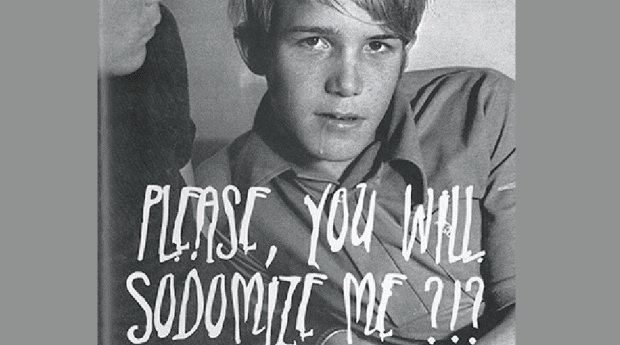
Celebrated Canadian queer icon AA Bronson recently launched the second edition of Queer Zines. Surveying more than 120 titles, Queer Zines 2 offers a detailed, proactive and decidedly sexy look at the format’s history. Covering publications from the movement’s earliest moments in the 1970s through the new generation of creators working today, it’s the only survey of its kind examining the continually evolving medium.
Xtra chatted with Bronson — who’s recently relocated to Berlin from New York, where he’s lived for most of the past three decades — about the project.
Xtra: Queer Zines draws a lineage between some of the earliest creators and the people making zines today. From a historical perspective, what part have zines played in the gay movement?
AA Bronson: Well, first I think we need to distinguish between gay liberation and queerness. Gay liberation starts in California in the ’60s, and it’s the movement that eventually moves toward gay marriage and trying to give people the same rights as straight people. It’s not only about rights, but also about normalizing being gay. The queer movement is kind of the opposite of that. It’s about saying I’m an outsider and I like that and I want to stay that.
Zines are specifically important in queer history because they have a very political edge, and there was really no other forum for expression of those political beliefs. Zines were mostly circulated underground, very much a grassroots movement. They’ve had an astonishing effect, particularly for young people — high school students who feel they don’t fit in even with the conventional gay scene. But they discover these zines and begin to find a way to belong.
I think of zines as falling into that category of inherently “queer” media, a bit like Super 8 film: cheap and easy to produce, a little rough around the edges, with a DIY sensibility.
In other words, “punk.” The overlap between queer and punk is so intense at times. Super 8 and zines come out of the same moment. In each case, it’s an available technology. With zines, it was the photocopier; with Super 8, it was a consumer-grade film product intended for household use.
Is there a reason both formats exploded at the same time?
It was about groups of people who didn’t see themselves as fitting into the mainstream and were more interested in the kind of community that was built through the exchange of media. Zines were hardly ever sold. They were mostly just exchanged through the mail with other zine creators. Similarly, Super 8 was based around low-budget festivals and people showing each other their films. But in both cases, it’s about not being part of the art world or the publishing world, but wanting to avoid those structures and just do it fast and easy. Part of that is about things becoming too big and institutionalized and young people feeling like they didn’t have access. It was a group of young people who were just sick of waiting for major institutions to pay attention to us.
Queer Zines 2 is available for purchase online.

 Why you can trust Xtra