Growing up, I felt like my whole life was leading up to the day I got my driver’s license. I was itching for a way out of the suburban monotony and tedium that had come to rule my days. There’s not much to do in the suburbs except drive. If I could drive, I could go anywhere. If I could drive, I thought, I’d be free.
My best friend Avery lived around the corner from me. In our Ottawa suburb, there was nothing around but stretches of identical houses for miles. Before we got our licenses, all there was to do was walk back and forth to each other’s houses and watch stupid CW shows and make fun of our classmates’ yearbook photos so we’d feel better about our pubescent homosexual urges. Once we could drive, the world opened up before us—but not in the way I’d expected. I thought we’d end up in all sorts of new and different places. Instead, we’d pick each other up and just start driving. We weren’t free because of where the car took us; we were free because we were inside the car. We never went anywhere. We just went.
Inside the car was the sound system, which was the best part of any road hang. What came out of the stereo were songs we’d scavenged off Tumblr. In 2014, there was an endless supply of lackadaisical, moody indie pop about being a teenage outsider. In my friend’s car we blasted Troye Sivan and Marina and the Diamonds and Lana Del Rey and Marianas Trench and The 1975 and Lorde and Arctic Monkeys and Mother Mother. The front seat of Avery’s car felt boundless. When we drove with the radio up we were outside of our neighbourhood and inside a universe handmade by and for us.
Above all else, we listened to Halsey. When her first album, Badlands, came out in 2015, it overtook all our spare moments. We would begin each car ride with the album’s fourth track, “Drive,” then shuffle through the rest of the record on repeat.
My attraction to Halsey was twofold. Firstly, her music were terrific. She managed to refine the reverby, Tumblrized pop I loved into potent and precise songs. The production on Badlands was dreamy yet sharp, and all of its songs are earworms, though they’re tinged by cigarette smoke. I dare you to listen to “Colors” or “Gasoline” or “New Americana” without humming them back.
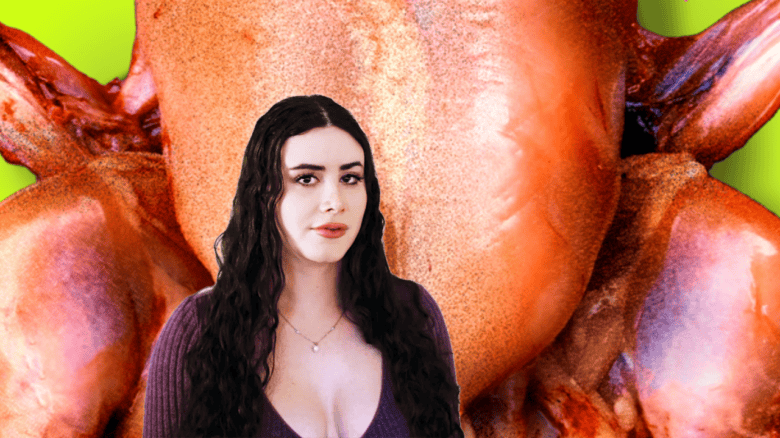
But there were plenty of fizzy little pop songs at the time. The second thing that kept me with Halsey was her persona. Her hair was electric blue and she sang about sex and drugs and bad men and she was bisexual. Though she only had a couple of years on us, our lives bore no similarities. Basking in Badlands was intoxicating.
One day, my friend and I planned our biggest adventure yet—and this time, there was to be a destination. On a cloudless Friday night, my friend stowed their telescope in the backseat of their car and we drove to the outskirts of Ottawa and pulled over to the side of a dirt road. Kilometres away from the light pollution of the suburbs, the blue-black sky was glistening with millions of stars, more than I’d ever seen. Avery showed me Cassiopeia, their favourite constellation. They pulled out their phone and played Badlands from the start. I felt microscopic under the sky’s great expanse. I felt like I was elsewhere. I felt like I was home.
After high school, Avery escaped the suburbs and moved to Toronto. I stayed in Ottawa to study. For the first couple years of university, I lived for the weekends where I’d hop on the Greyhound to visit them. I met all their cool new friends and tried foreign cuisines I’d never tasted and bought outlandish clothes at vintage markets. We listened to our high school music and watched our high school movies, the history between us mingling gorgeously with the memories we were still making. The vastness of Toronto splayed out before us, each alley and shop begging to be explored and conquered. It quickly became clear that Ottawa and I didn’t fit, and that the big city and I did.
But as university lurched on for both of us, things changed. By third year, I was flourishing on campus in Ottawa. I got involved with the student paper and accumulated cool new friends of my own and dated boys and found new music to love. Meanwhile, Avery suffered some hardships of their own. I visited less. While my gaze was elsewhere, our paths forked.
In fourth year, I got an internship at an elite newspaper in Toronto and stayed with Avery. This time around, something wasn’t right. Our old magic had flickered out, replaced by an implacable tension. One day, I left some dishes in the sink and went to work, consumed by the promise of a new life, and came back to a difficult conversation about how our cohabitation was a failure. We’d outgrown being kids together, and now I was just an adult man who couldn’t be bothered to clean his friend’s dishes. We parted respectfully and I spent the rest of my internship in a hotel.
After graduation, I moved at last to Toronto. I finished school in 2020, and moved to the city in the fall, while COVID-19 had it in a chokehold. The provincial government was constantly loosening then tightening social distancing requirements, and in order to preserve my sanity I followed their shifting rules, even though I was skeptical about their scientific credibility. I saw Avery sparingly, when restrictions ebbed, but otherwise I stayed in my apartment.
Her hair was electric blue and she sang about sex and drugs and bad men and she was bisexual.
During one of these ebbs, we agreed to see each other for the first time in months. It was one of the earliest times since COVID-19 broke out that we were allowed to be inside businesses without masks, but Avery was only comfortable seeing me outside with KN95s on. I had been going out to bars with my boyfriend, but I thought their request was perfectly reasonable. I wanted to see my friend, and wanted to make them feel safe.
We met in High Park. It was a beautiful March day. The park was awash in emeralds and jades, and a crystalline pond shimmered before us. My friend arrived and we sat on opposite ends of a bench, our masks obfuscating our faces. Still, I was happy to be with my friend.
I felt, though, that a familiar tension pervaded our conversation. Eventually, Avery punctured it. “I saw that you’ve been going out without a mask,” they asked coolly. “Can I ask why?”
It was a perfectly rational question and I lacked an adequate response. I mustered up something about following provincial guidelines. It didn’t seem to sit well with them. A thick, uneasy silence surrounded us for a couple minutes. I can’t say what they were thinking, but I had a feeling this rift threatened to pull us apart. Regrettably, I let it.
I ended our conversation and walked home and took off my mask. I didn’t see Avery for three years.
Things continued on, strangely, inevitably. My life blossomed before me, and I became something like an adult. But I ached for Avery, who knew me so well, who had seen so much of what I’d come from, who knew better than anybody what it took for me to build what I had. I dreamt of them often. In those dreams, we sometimes reconciled, and other times they eviscerated me for abandoning them. Either way, I woke up angry and confused, the little bruise they’d left in me burning anew.
2024 turned to 2025, and the dreams of them surfaced more regularly. The tenth anniversary of Badlands was nearing; 10 years since we’d driven into the stars along the outskirts of our hometown. After one of these dreams, I awoke to a text from Avery. “Sorry if this is unwelcome or jarring—I know it’s been literal years—but I just wanted to say I’ve been thinking of you fondly lately and I hope you’re living your best life,” the message read. “Somehow, I just know you’re killing it.” I thought of Halsey’s “Ghost,” one of Badland’s signature tracks. The song is about a person from the past who’s become an apparition, an invisible entity that feels just out of reach. Like a phantom, my friend had appeared from the ether. I wanted to reach out and touch them again.
We made dinner plans on a chilly Saturday in early March, almost exactly three years since our conversation in High Park. I got to the table first. I was a bit giddy, but mainly I was nervous. I steeled myself for conflict, and felt wracked by guilt over my role in the dissolution of our friendship.
They walked in with a mask on. I stood and we hugged for a long time. During that precious embrace, all the tension and resentment and confusion that we’d erected between us dissipated.
Our emotions tempered and we sat down and ordered food and they caught me up. Life had been hard on Avery in the interim between our last meeting and this one, and I felt sorry that I hadn’t been there for them during their time of need. I caught them up in turn. I’d lost my old job and got a new one; I’d broken up with my long-term boyfriend and was seeing someone else. We’d both imploded and reassembled our lives several times over. What remained was our old selves, which we’d built as kids, around each other.
After that dinner, gingerly, steadily, we carried on with our friendship. I wished them a happy birthday and they did the same for me. We saw each other more often; it turned out we lived a few blocks from each other, just as we had in our old suburb.
In the fall, I woke up to another text from Avery. “Guess who got tickets to the Back to Badlands tour?” For its tenth anniversary, Halsey was touring our favourite album. Avery had bought us both tickets. The show was in January, and it gave me something to look forward to as the days in Toronto withered to darkness and bitter cold. And as that darkness spilled in, I felt Toronto’s grasp, which had once kept me spellbound in its streets, begin to loosen.
After half a decade in the city, years I spent falling in love and nursing heartbreak, where I won a career and lost it, where I strengthened and eroded and rebuilt my relationship with my old friend, I gave notice on my apartment. It was time to say goodbye to the city I loved, at least for a while. But Toronto had taught me that endings rarely last forever. Comebacks are inevitable, no matter how out of reach they may seem.
On a punishingly cold January evening I boarded the subway to the concert hall. I slid a light blue surgical mask over my face. I had a teal button-up and pink pants on, trying to evoke the magenta-blue blur that swaths the cover of Badlands. At the venue, Avery complimented my outfit. They said it matched my mask.
The show opened with the beguiling, eerie synths of “Gasoline,” an old favourite of ours. Halsey went on to perform another 32 songs, including the entirety of Badlands. She is an electrifying performer, brimming with rockstar attitude and an unabashed, infectious love of her own music. A three-hour show can easily become tedious, but this was a celebration for her oldest fans.
For the duration of those three hours, I was transported back to Ottawa, to a time when Halsey’s music was my only tether to a future where I was somewhere and somebody else. But as Avery and I exited the venue, dazed and exhausted by the show, it became clear that although our dreams of leaving came true, we were still those same kids who went on long drives together all those years ago.
We walked out the doors and the cold Toronto wind rushed over us. I looked up at the black sky, and I swear I saw Cassiopeia, glimmering and ancient and unchanged.

 Why you can trust Xtra