Republicans have found a new battleground to wage war against trans youth: free school lunch programs.
In a lawsuit filed against the U.S. Department of Agriculture (USDA) last Tuesday, 22 Republican attorneys general argued that the government agency’s anti-discrimination directives restrict their states’ ability to enforce their own laws related to LGBTQ2S+ people, the Associated Press reported. The USDA’s Food and Nutrition Service funds school lunch programs, as well as nutrition assistance programs for low-income people.
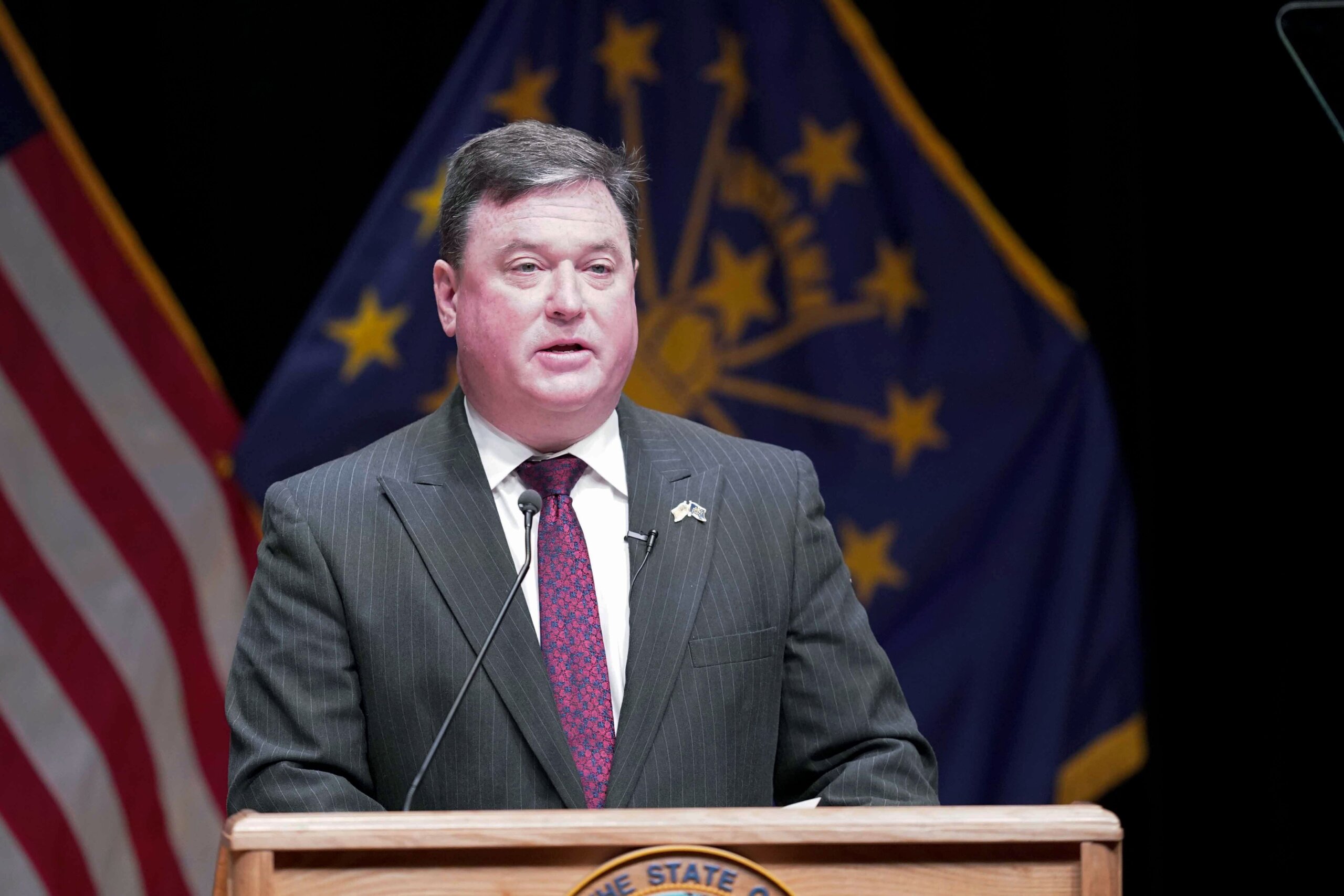
Tennessee attorney general Herbert Slatery III and Indiana attorney general Todd Rokita led the lawsuit, which was filed in the U.S. District Court of the Eastern District of Tennessee. Other states filing the lawsuit include Alabama, Arizona, Kansas, Ohio, Texas, Virginia and West Virginia.
“This case is, yet again, about a federal agency trying to change law, which is Congress’ exclusive prerogative,” Slatery said in a statement received by the Associated Press. “The USDA simply does not have that authority. We have successfully challenged the Biden administration’s other attempts to rewrite law and we will challenge this as well.”
“Whether you are grocery shopping, standing in line at the school cafeteria or picking up food from a food bank, you should be able to do so without fear of discrimination.”
The USDA issued the updated policy in May. In addition to barring discrimination against LGBTQ2S+ students in USDA-funded school programs, the directives guide schools to investigate allegations of discrimination, and to post signs telling people about the anti-discrimination policy. In a press release, the agency points out that LGBTQ2S+ communities face historical economic disparities—which can contribute to nutrition insecurities.
“Whether you are grocery shopping, standing in line at the school cafeteria or picking up food from a food bank, you should be able to do so without fear of discrimination,” said Food, Nutrition, and Consumer Services deputy under secretary Stacy Dean.
All schools that use federal funding for their school lunch programs—95 percent of public schools, as well as many private schools and daycares—must follow these directives, and the USDA would report violations to the Department of Justice.
The directives come in the wake of Bostock v. Clayton County, a landmark 2020 Supreme Court decision protecting LGBTQ2S+ people from workplace discrimination under Title VII of the Civil Rights Act of 1964. In June 2021, the Biden administration further asserted that anti-trans discrimination is illegal according to Title IX of the Education Amendments of 1972, which bans discrimination based on sex in schools that receive federal funding. This move is part of a larger attempt to reinstate Obama-era protections for LGBTQ2S+ people that the Trump administration rolled back.
However, these attempts haven’t gone unchallenged. Just two weeks ago, a Tennessee judge temporarily blocked two federal directives guiding states to allow trans youth to use bathrooms and join sports teams according to their gender, rendering them unenforceable in 20 states.
According to the Human Rights Campaign, 2022 has seen over 300 anti-LGBTQ2S+ bills introduced. At least 130 of these target trans youth, denying them gender-affirming medical care and barring them from the sports teams and bathrooms that correspond with their gender identity.
Tennessee, one of the leaders of the USDA lawsuit, has been at the forefront of other anti-LGBTQ2S+ efforts. Last year, the state enacted five laws targeting LGBTQ2S+ youth. And Indiana, another leader of the suit, became one of 18 states that now ban trans girls from competing in girls’ sports in January—though a judge in the state recently put a temporary block on the law.

 Why you can trust Xtra